Generic selectors
Exact matches only
Search in title
Search in content
Post Type Selectors

Category: news

UGAMI Staff Appreciation

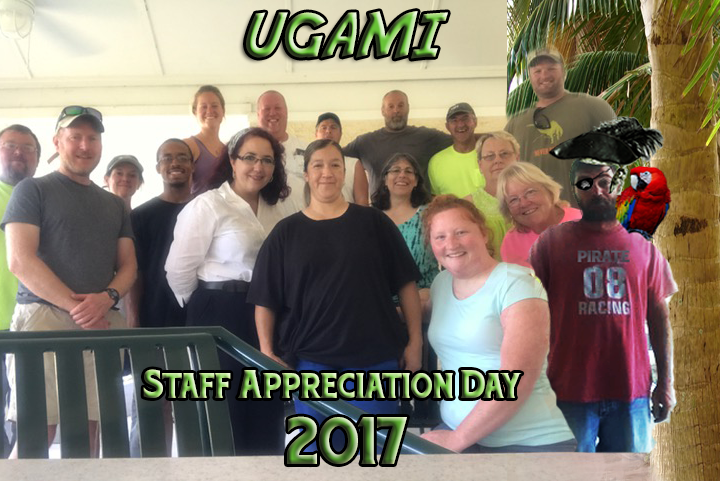
On Thursday, May 11, the staff of UGAMI gathered for our annual staff appreciation.  Even that infamous pirate, Captain E.C., was in attendance.  There was much merriment and cake, too.

A group of people poses indoors for a photo under a sign reading UGAMI Staff Appreciation Day 2017, celebrating UGAMI staff appreciation with a pirate-themed edited figure on the right.

UGAMI Staff 

Sapelo Island’s remote location often means that extra effort is required to get things done.  This group goes the extra mile, every day.

UGAMI installs new seawater system

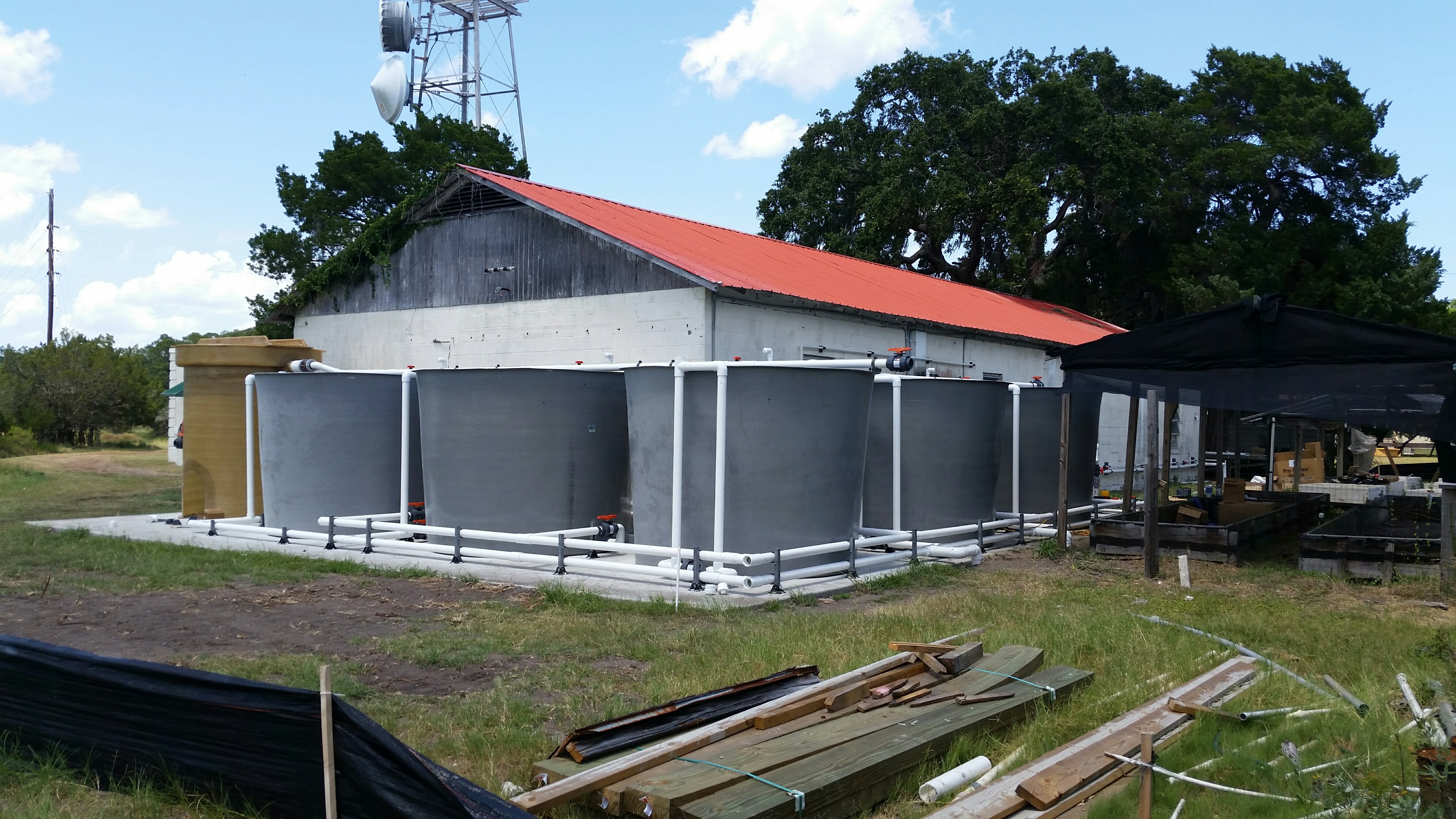
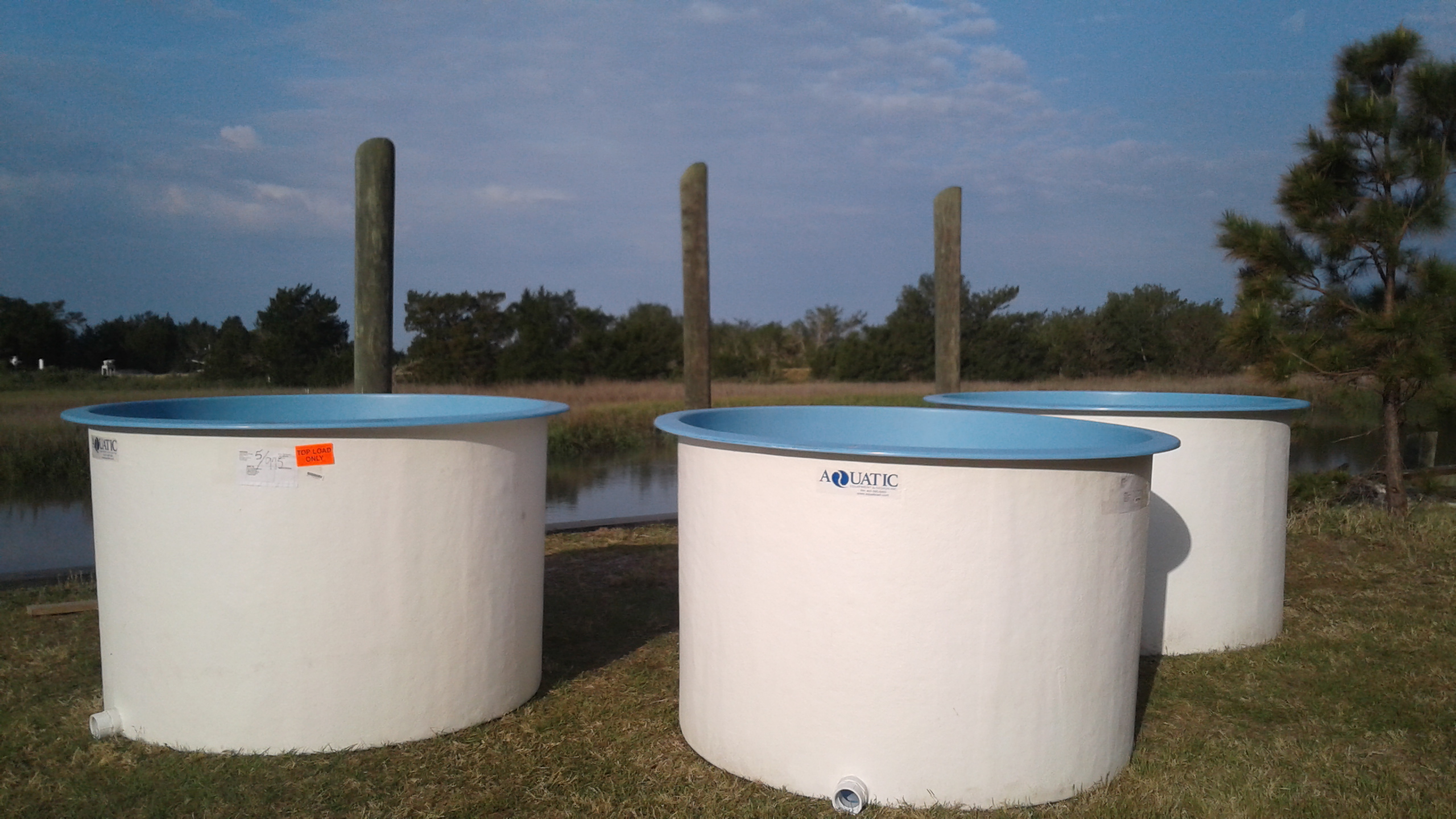
With funds from an NSF Field Stations and Marine Laboratories grant, we completed renovations of the systems supplying water to UGAMI’s seawater laboratories.  These facilities allow us to maintain a large variety of tanks and aquaria for studying marine organisms in a controlled setting. The new system is far superior to the one it replaced.  It can supply up to 75 gallons of seawater per minute; monitors the creek level and only runs the pumps when the intakes are submerged (preventing damage caused by the pumps running dry); incorporates five 3,000-gallon modular storage tanks to supply seawater at low tide (when the pumps are off); actively manages the pressure in the seawater line to maintain consistent flow; and provides several filter options, including bag filters, a radial flow settler, bead filter, and in-line UV sterilization, so we can supply seawater to suit the needs of any research user. In addition, we have just taken possession of three 1,000-gallon tanks for maintaining and studying larger fish and two 8’ sink trays for washing and processing samples of marsh plants.


Large cylindrical water tanks for the UGAMI seawater system are positioned beside a white building with a red roof, surrounded by pipes and construction materials, with trees and a cell tower in the background.

Rotary settler (left) and five 3,000-gallon holding tanks. Once the tanks, filters, pumps, and plumbing were completed, this entire system was enclosed under a new structure.

Three large white cylindrical tanks, part of the UGAMI seawater system, feature blue interiors and sit outdoors on grass near water, with trees and tall wooden posts in the background.

Fresh off the boat! Three new 1,000-gallon tanks were just delivered to UGAMI aboard the R/V Spartina. These tanks will be used to study larger fish.

Chris Craft publishes new book on wetland restoration

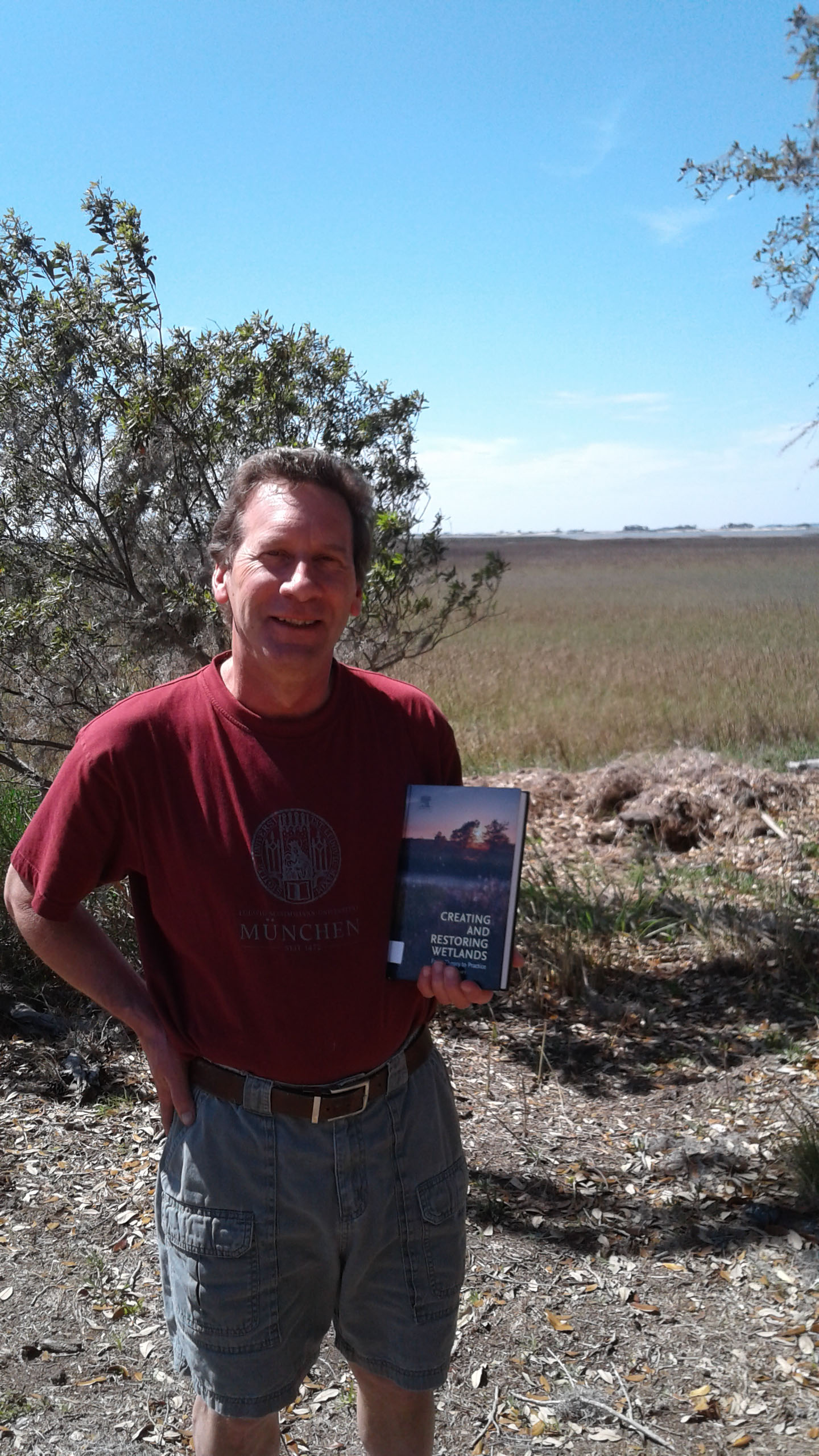
A man in a red Munich t-shirt stands outside holding Chris Craft’s new book, Creatures of the Southeast Atlantic Sands, with grassy wetlands and hints of wetland restoration in the background.

Prof. Chris Craft with his new book at Sapelo Island, site of much of his work.

Indiana University Professor and UGAMI Faculty Affiliate, Christopher Craft, has just published a new book titled Creating and Restoring Wetlands: From Theory to Practice. Given the challenges and opportunities facing wetlands in the coming century, this book will undoubtedly become an essential tool for restoration practitioners.

Publishing a book of this magnitude is a monumental achievement.  But Chris is quick to credit the UGAMI scientists who came before him for creating this field and building the foundation on which his research is based.

So now, whereas the rest of the world knows him as “that famous scientist who wrote the text book,” we just know him as “Chris, our good-natured colleague who is devoted to mentoring students, loves Sapelo Island, and has a weakness for oysters.”  Congratulations, Chris!


Book Citation:

Craft, C.  2016. Creating and Restoring Wetlands: From Theory to Practice. Elsevier Press. Amsterdam, Netherlands. 348 pp.  ISBN: 978-0-12-407232-9.

UGAMI gets new small boat docks

To get to ocean and estuarine habitats, marine scientists depend on boats; they’re a basic tool of the trade.  Most people understand the importance of boats to our work.  But there are other, somewhat less exciting, tools that are just as important.  For example, a boat is fairly useless unless you have a dock that allows you to get onto your boat. With that in mind, you’ll understand why so many of us at UGAMI are thrilled that we just replaced both of our small boat docks.

UGAMI maintains a dock on Sapelo Island’s Post Office Creek, near the Georgia Department of Natural Resources (DNR) office.  The dock had been showing its age; the creek bank had eroded and destabilized the pier, and the floats were falling apart.  There was a long-term plan to replace this dock, but it would take a few years to implement because the initial cost estimate for the project was $180,000.

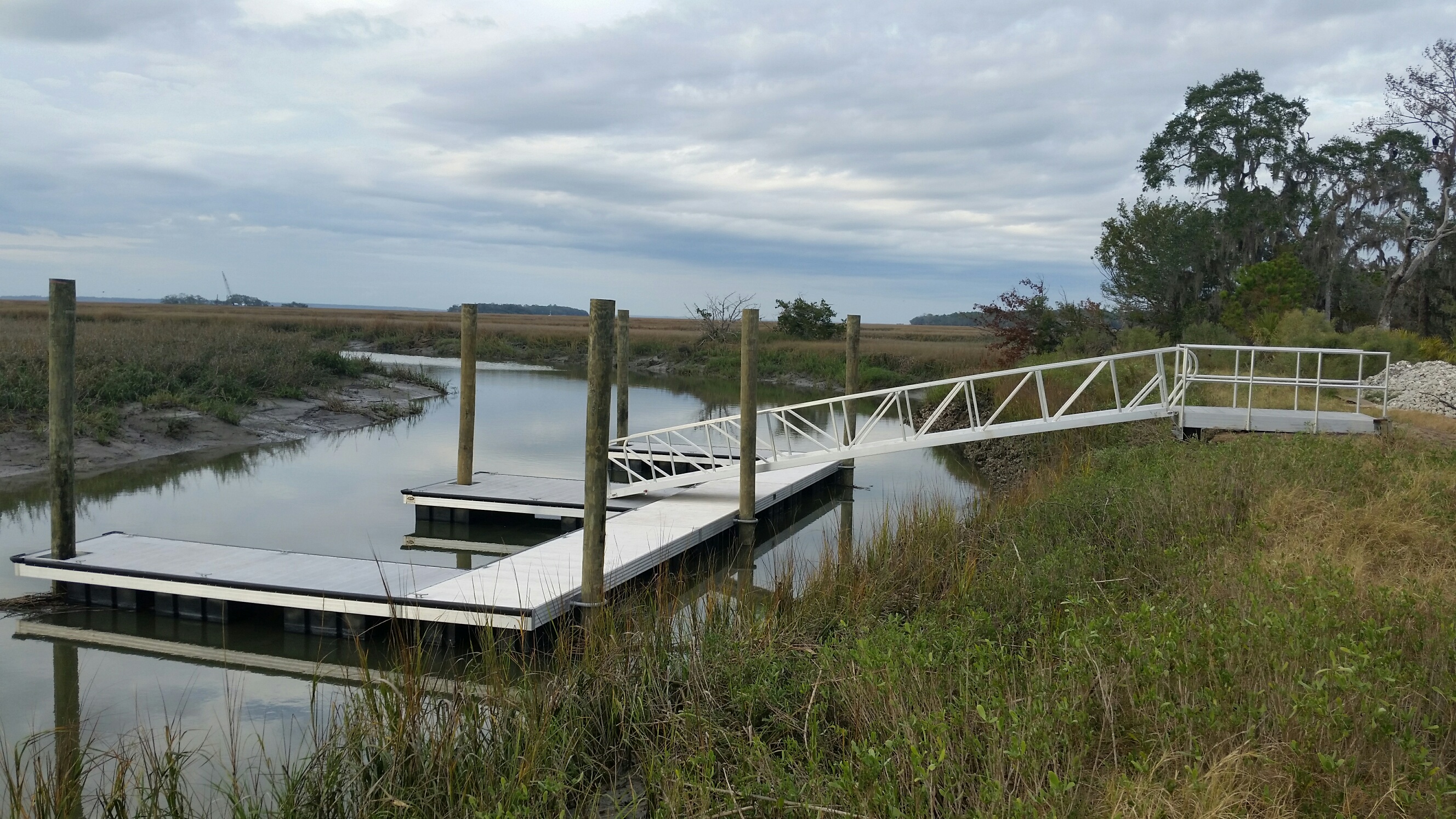
Then we lucked out.  The Georgia DNR maintains a separate dock, further up Post Office Creek, which was already scheduled for replacement.  But because the creek channel had migrated northward several yards over the past few decades (hence the erosion undermining the pier), the construction barge wouldn’t be able to pass the UGAMI dock to get to the DNR dock.  So the marine construction company that had the contract to replace the DNR dock, R.L. Morrison and Sons, Inc., contacted Jacob Shalack,UGAMI’s Assistant Director for Operations, to find out if they could temporarily remove our dock to gain access to the DNR dock.  Since it didn’t make a difference to the R.L. Morrison construction crew whether they re-installed the old pilings and floats or installed new ones, Jacob realized that this was an opportunity to replace the dock at a small fraction of the original cost estimate.  Much of the expense of dock replacement is for labor and for the tugboat, barge, and crane needed to transport and install the new materials.  Since R.L. Morrison was willing to waive these expenses, we could get a new dock for just the price of the materials, but we needed to act fast.  With the help of UGA’s Office of Research, UGAMI Director, Merryl Alber, cobbled-together the funds to purchase a new walkway, ramp, pilings, and floats.  The savings was enormous, and the old wooden dock was replaced with a more durable aluminum structure with space for six small boats.

Just before the Post Office Creek dock replacement opportunity arose, we had also replaced the single floating dock at our boat haulout.  This makes it easier to launch and retrieve boats.  By making it easier to launch our boats and get underway, we can spend more of our time pursuing our mission: conducting research.

A wooden dock with a small boat docks along the tranquil water at UGAMI.

Old dock.

A white UGAMI floating dock with a ramp extends over a narrow marshy waterway, surrounded by tall grass and trees under a cloudy sky—one of several small boat docks in the area.

New dock.


Whiting-Turner work weekend at UGAMI a success

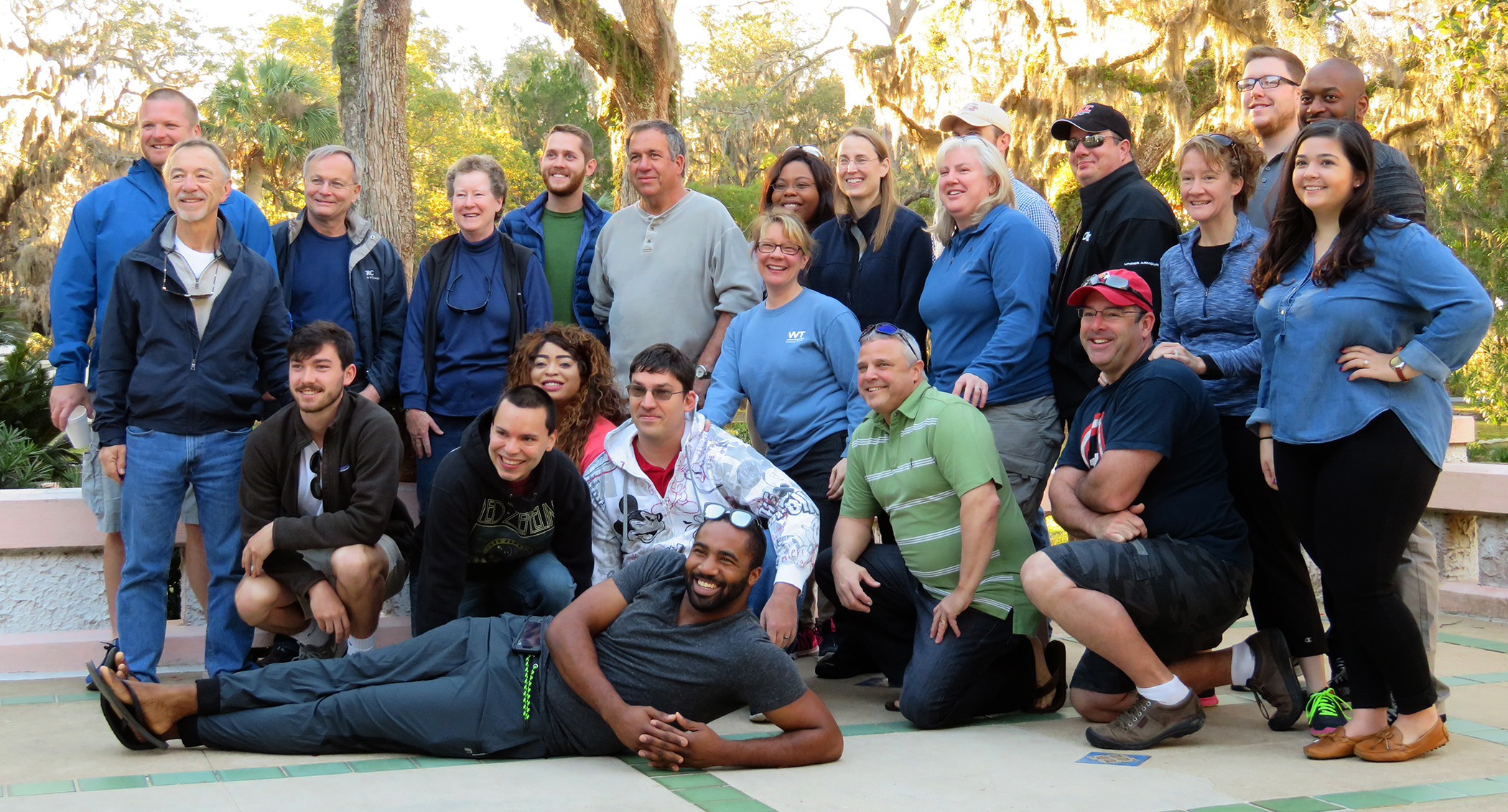
A group of 22 adults from UGAMI and Whiting-Turner pose together outdoors on a tiled patio during a work weekend, with trees and greenery in the background.

Participants in the 2017 Whiting-Turner work weekend at UGAMI.

Since 2015, the Whiting-Turner Contracting Company has sponsored an annual volunteer work weekend helping to improve the UGAMI facilities.  Eighteen Whiting-Turner employees and their spouses spent this past weekend on Sapelo Island working side by side with UGAMI staff, Beth Richardson (Friends of UGAMI), and representatives from campus (David Lee, VP for Research; Carl Bergmann, Associate VP for Research; and Gwynne Darden,  Associate VP for Facilities Planning) .  The group painted the interior of the seawater lab, the exterior trim on the Barrier Island Research Lab, and the office of our newly-hired accounting technician, Tina Ridley.  They also pressure washed the exterior walls of the buildings in the main quad and on Saturday afternoon, they held a brainstorming session on infrastructure planning for the UGAMI campus. Thanks to the expertise of the group, which included construction project managers, engineers, and marketing specialists, the brainstorming session yielded many good ideas to consider. As a reward for their hard work, the volunteers enjoyed fantastic meals provided by the kitchen wizards at the Reynolds Mansion and had a beach bonfire on Saturday night.

Everyone at UGAMI thanks Whiting-Turner and the Whiting-Turner employees for all their hard work. You Rock!


It’s five o’clock somewhere…but not always on Sapelo Island

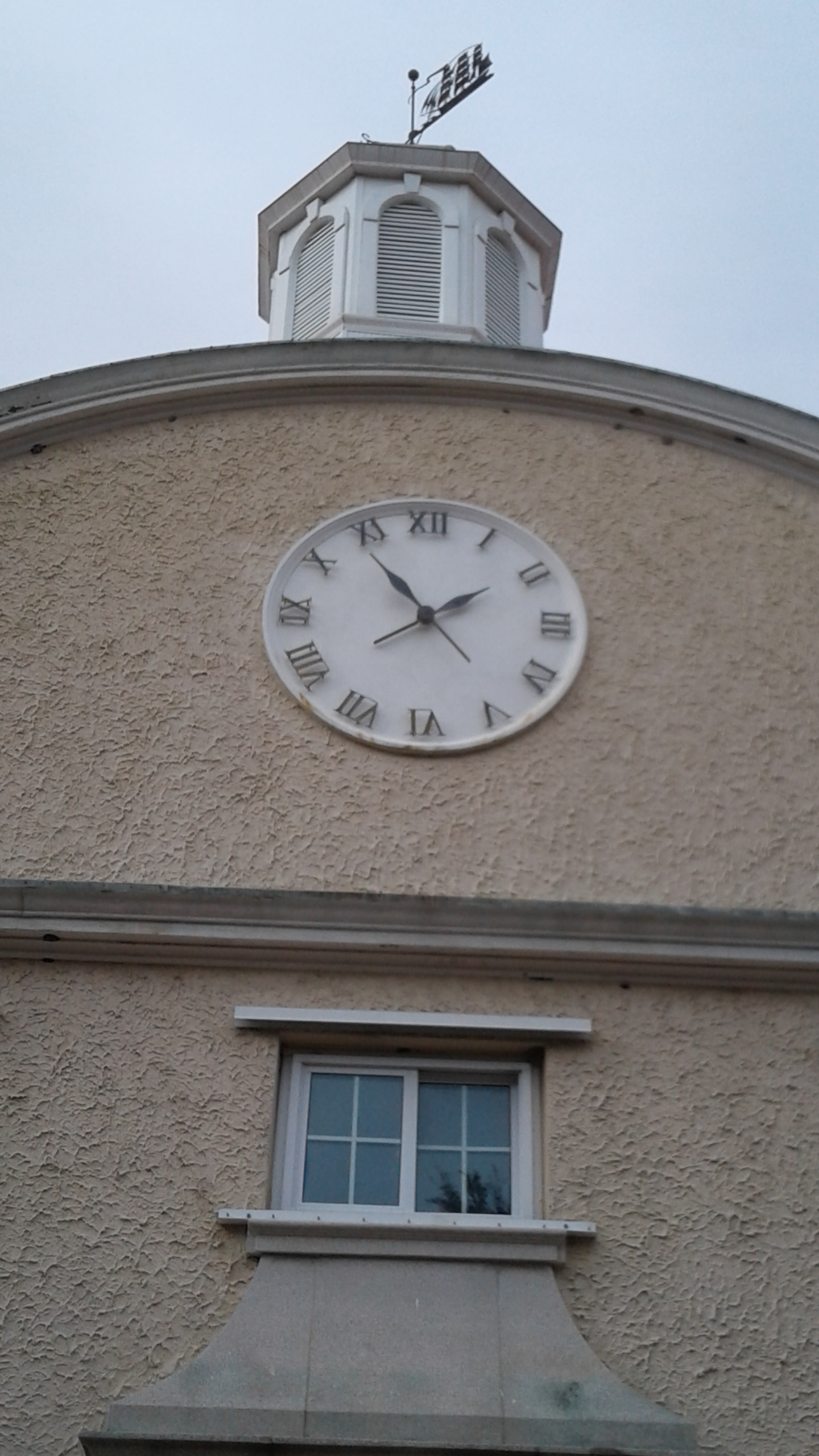
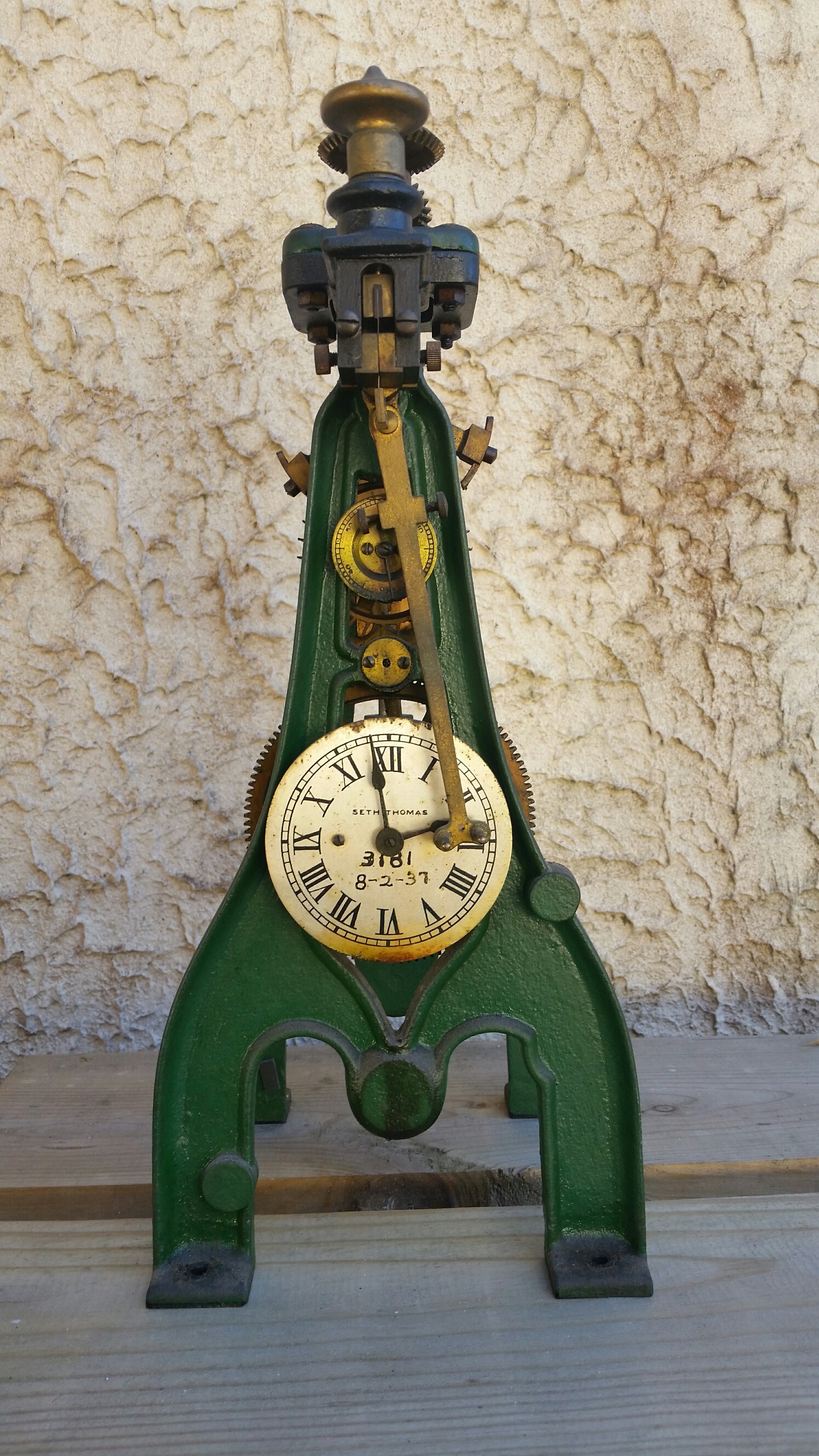
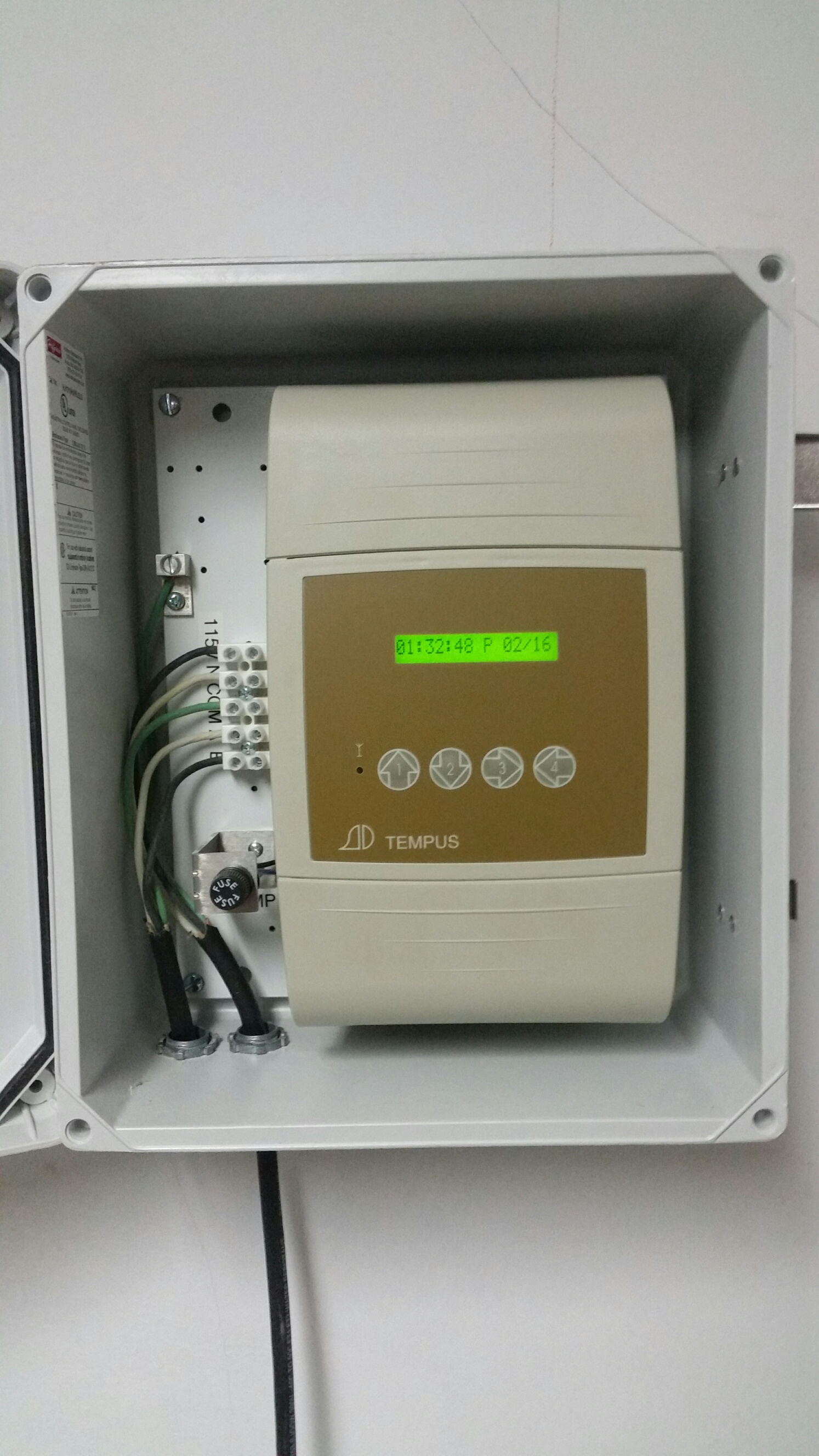
Although Jimmy Buffet is almost correct when he sings “It’s Five O’Clock Somewhere,” now it’s only five o’clock twice a day at UGAMI. The 1937 Seth Thomas clock on the front of the Main Lab building had been stopped for many years; its antique gears had worn out and its hands constantly insisted that it was 5:00.  Then one day last year, UGAMI’s assistant director for operations, Jacob Shalack, contacted Elderhorst Bells, Inc., a company in Pennsylvania that manufactures and restores large outdoor clocks, to find out if it would be possible to replace the damaged gears. After exchanging a few emails, the folks at Elderhorst determined that the clock movement (the mechanism that controls the hands) was not original and that the best thing to do was to replace the clock movement rather than just the gears.  Thanks to funds raised by the Friends of UGAMI and the hard work of some dedicated UGAMI staff, we were able to resume the normal progress of time on Sapelo Island.  UGAMI’s auto mechanic, E.C. Harrell, spent a lot of time climbing inside the wall of the auditorium to extricate the old clock movement and install the new one.  Our facilities manager, Jason Johnson, wired the new movement and electronic control box.  On a separate yet related note, research technician Tim Montgomery restored the bell in the cupola to a functioning state.

In the grand scheme of maintaining and renovating the facilities at UGAMI, the clock and bell may be small pieces of the puzzle. But they are tangible symbols of UGAMI’s rejuvenation.


clock on main lab at Marine Institute at Sapelo Island A white clock with Roman numerals shows the time as 5:10 on the exterior wall of a beige building on Sapelo Island, with a small window below and a cupola above—reminding us it's five o'clock somewhere.

A vintage green mechanical clock with exposed gears, Roman numerals, and a worn face stands on a wooden surface—evoking the timeless charm of Sapelo Island—against a textured beige wall.

Old clock movement.

An open electrical control panel with exposed wiring and a TEMPUS device displaying a digital screen with green text, as if it’s always five o’clock somewhere on Sapelo Island.

New clock control box.

UGAMI begins major renovation of main lab

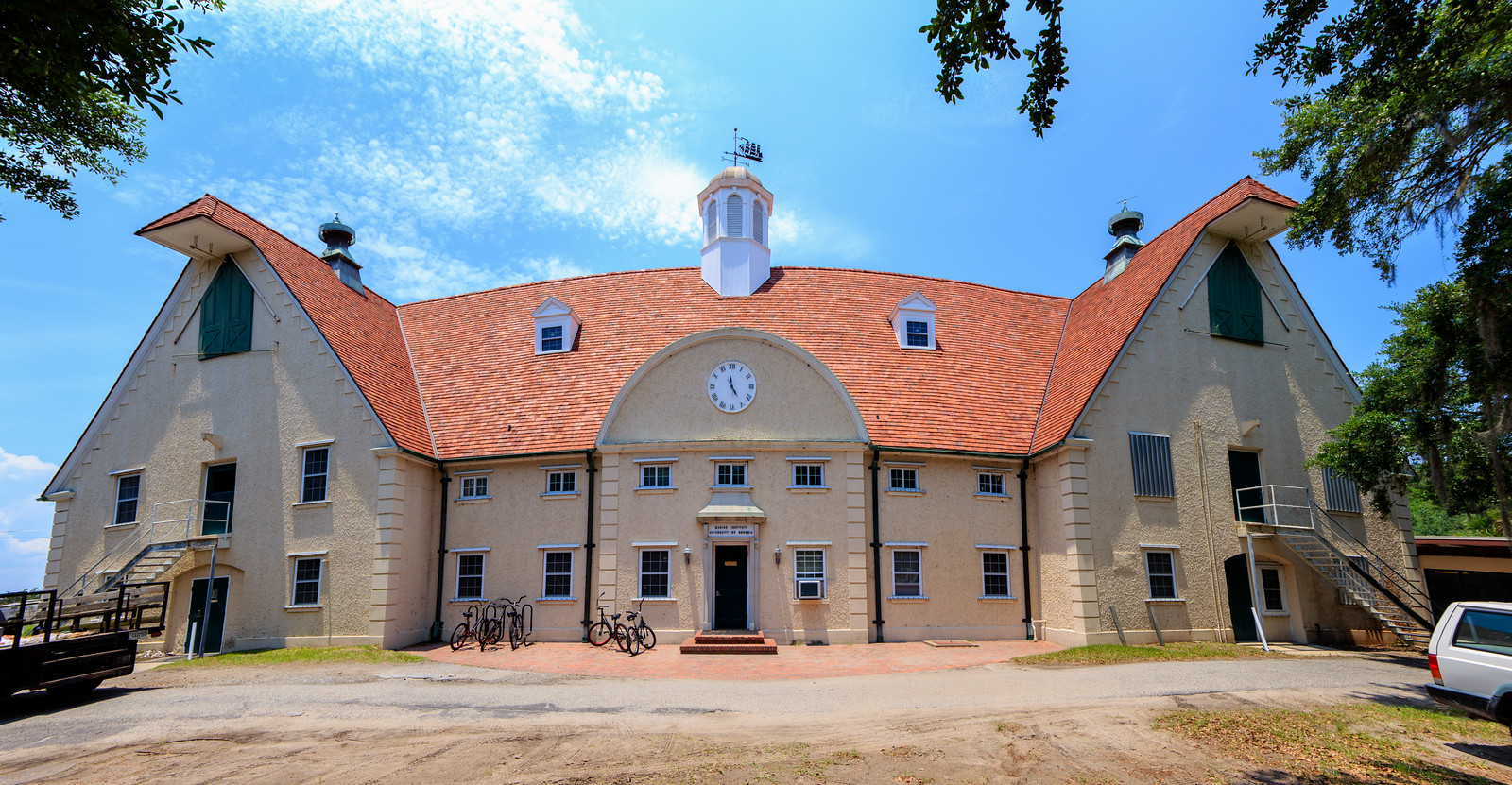
Large historic building with a red-tiled roof, central clock, cupola, and arched dormers; bicycles parked at the entrance showcase UGAMI's charm while the Main Lab renovation brings new life. Trees and blue sky form a scenic backdrop.

UGAMI’s Main Lab before the renovations. Most of the work in the first phase of the renovation will take place in the wing of the building seen on the right side of the photo.


Last month, work started on a major renovation of UGAMI’s main laboratory building.  This project represents the first phase of a multi-year plan to completely renovate and modernize the Main Lab.  At 20,000 square feet, the Main Lab is UGAMI’s largest building, and is critical to the Institute’s mission.

The main lab was built in the 1920s and was originally a dairy barn.  It was re-purposed as a research laboratory in 1953 when the UGA Marine Institute was founded.  It certainly wasn’t your average dairy barn (not many barns include a 100-seat theater), and it has served remarkably well as a research lab for the past 64 years.  However, at almost a century old, the building required upgrades to address critical infrastructure needs, and the space was not optimized to meet current programming demands.

The work being tackled in this first phase includes:

  • Replacing and upgrading the main electrical, plumbing, and heating/cooling services for the entire building;
  • Upgrading water and sewer lines servicing the building, as well as installing new septic tanks;
  • Gutting the northern half of the first floor;
  • and in the newly-cleared space, constructing four new research laboratories for use by visiting scientists and a 20-student teaching laboratory for classes.

See plans for the renovations of the first floor of the lab here: 3-4x – A-101A- FIRST FLOOR PARTIAL PARTITION PLAN -A Rev.0.

Undertaking a construction project on an island presents logistical challenges, as all of the construction material (and demolition debris) must be transported by barge.  The project called for a new foundation slab to be poured, requiring six fully-loaded cement trucks to be barged to the Island.

Support for the renovation is being provided by Major Renovation and Repair funds from the Board of Regents of the University of Georgia.  Phase I should be completed by April, just in time for the busy field research season and summer classes to begin.  Everyone at UGAMI is excited about the new teaching and research capabilities that these renovations will provide.  We will update the photo gallery periodically. Stay tuned!


SINERR turns 40

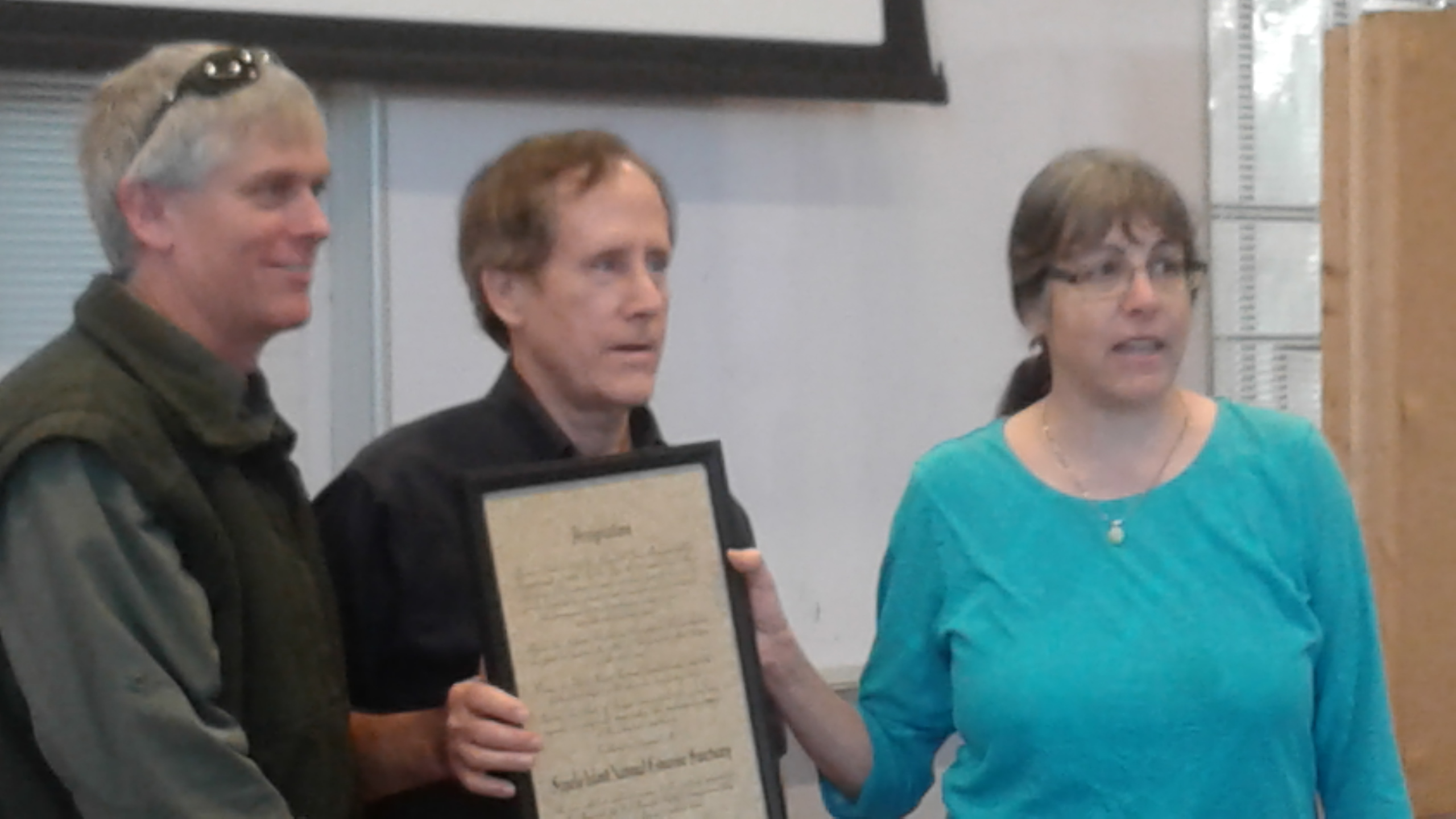
Three people stand indoors; the person in the middle holds a framed certificate celebrating SINERR's 40th anniversary, while the others stand on either side.

UGAMI Director Merryl Alber (right) presents plaque to SINERR Manager Doug Samson (center) and Sapelo Island Manager Fred Hay (left).

On December 22, 2016, the Sapelo Island National Estuarine Research Reserve (SINERR) celebrated its fortieth anniversary.  The 6,100-acre reserve covers a swath along the western and southern flanks of Sapelo Island, including the UGAMI campus. SINERR’s research and education initiatives focus on the natural ecosystems, cultural resources, and history of Sapelo Island and the surrounding estuary.

There is a long tradition of collaboration between UGAMI and SINERR; the two organizations have been intimately linked since SINERR’s inception. SINERR is part of the National Estuarine Research Reserve System, a network of 28 reserves spread out among coastal states.  The National Estuarine Research Reserve System was created by the federal Coastal Zone Management Act in 1972, with the mission “to practice and promote stewardship of coasts and estuaries through innovative research, education and training using a place-based system of protected areas.”  Research conducted at UGAMI helped convince Congress that America’s estuaries needed enhanced protection, and thus created the Coastal Zone Management Act and the National Estuarine Research Reserve System.  Given UGAMI’s pioneering leadership in estuarine science and Georgia’s commitment to protecting coastal ecosystems, it was not surprising that one of America’s first National Estuarine Research Reserves was sited here at Sapelo Island.

The National Estuarine Research Reserves operate as partnerships between coastal states and the federal government (under the auspices of the National Oceanic and Atmospheric Administration).  In SINERR’s case, the lead state agency is the Georgia Department of Natural Resources.

SINERR celebrated its anniversary at several events throughout the year, culminating in a ceremony at the Atlas Conference Center on the UGAMI campus at which UGAMI Director Merryl Alber presented the original plaque designating the Reserve to the Reserve Manager, Doug Samson.  The plaque dates back to the original dedication ceremony held at UGAMI in 1976 during which SINERR was created.  Signed by Governor George Busbee, the plaque had been on display in UGAMI’s main lab building for the past 40 years.  It now resides in SINERR’s headquarters.

New signage for the Alligator Pond/Water Garden

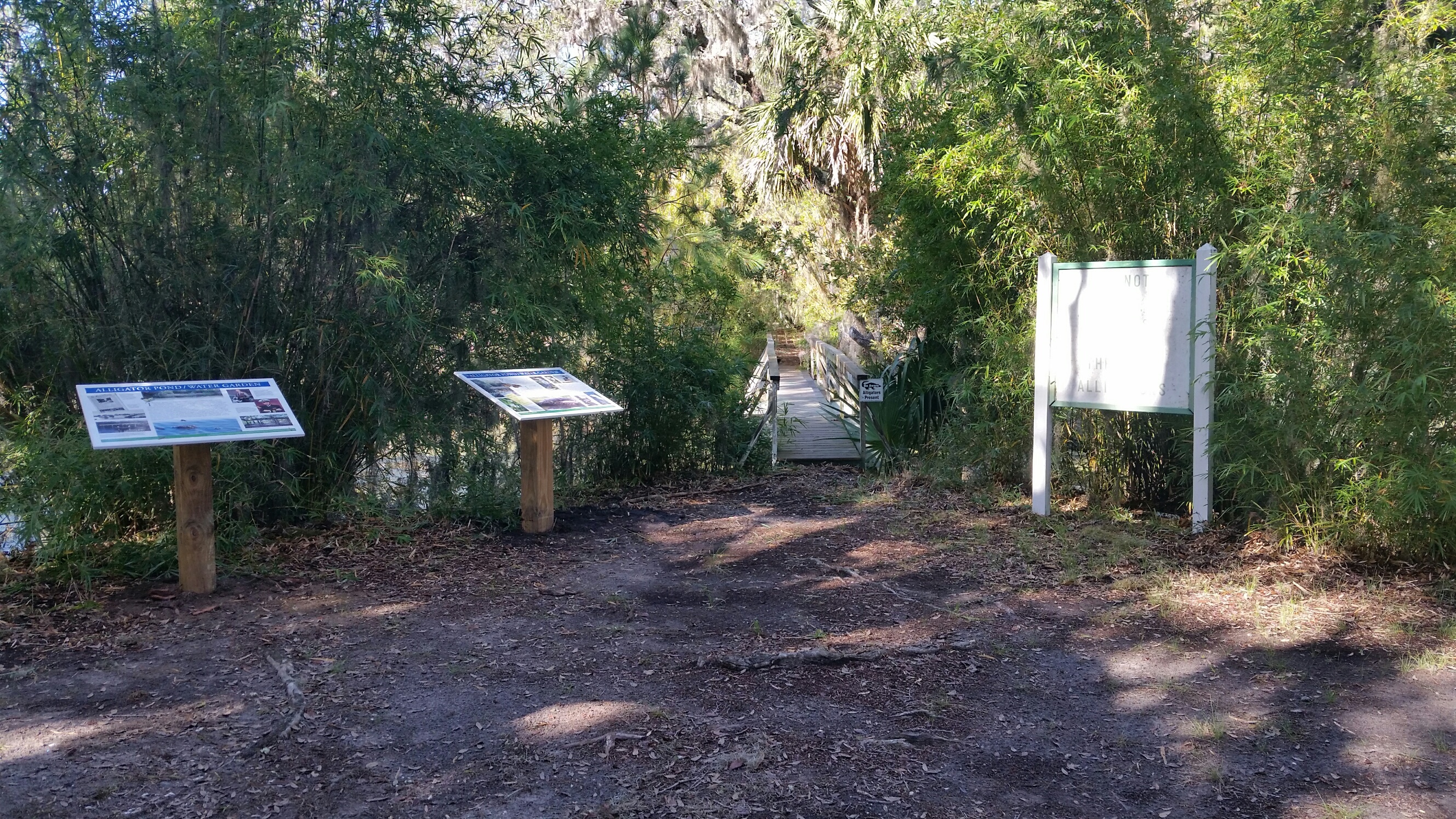
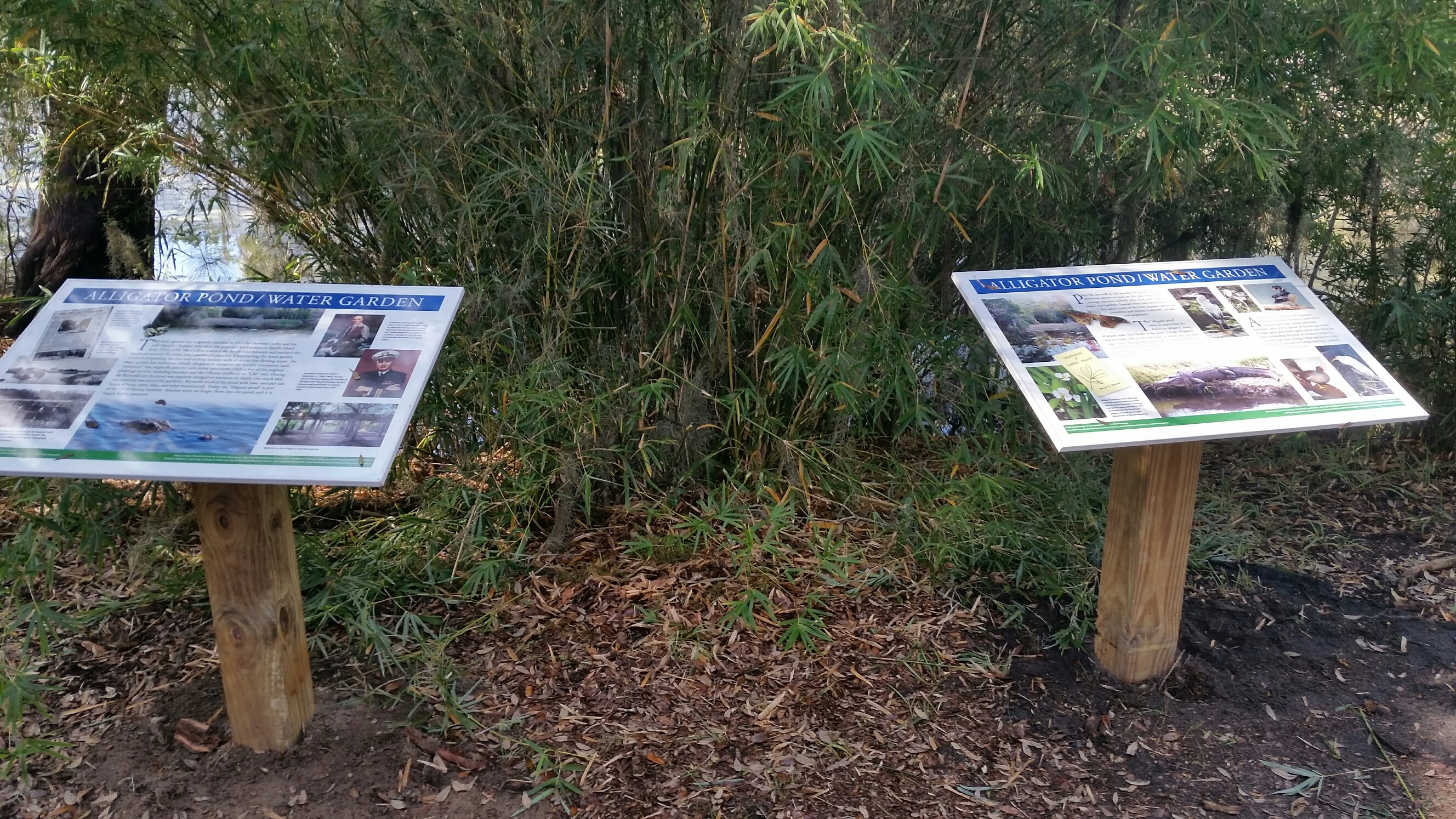
The Friends of UGAMI spearheaded a project to install two new interpretive signs for the Alligator Pond on the UGAMI campus.  One sign describes the history of the artificial pond, which was created in 1923 when Howard Coffin owned what we now call the Reynolds Mansion.  The second sign covers the ecology of the plants and animals that inhabit the pond.  The pond is home to a diverse array of wildlife, including turtles and alligators. Wood storks, egrets, and herons roost in the surrounding trees.  One recent survey by a visiting class counted 13 gators in the pond.

Wooden trail signs with new signage stand at the entrance to a narrow footbridge, surrounded by dense green foliage, leading toward the nearby water garden on a sunny day.

Click here to see a 360-degree view from the boardwalk in the Alligator Pond

The sign installation was a team effort.  They were designed by the The Friends of UGAMI, paid for by a grant from the Garden Club of Georgia (awarded to the Friends of UGAMI), and installed by the UGAMI maintenance staff.  Check them out the next time you are on Sapelo.

Two informational signs featuring new signage titled Alligator Pond Water Garden stand on wooden posts before dense green bamboo and dry leaves.

New interpretive signs at the Alligator Pond.

Job opening at UGAMI: Research Technician II

Research Technician II

Target Audience(s): Technician/Staff

Institution: University of Georgia Marine Institute

Institutional Web Link: http://ugami.uga.edu

Position Description: This position is based at the UGA Marine Institute on Sapelo Island, GA. The selected individual will serve as a field technician for the Georgia Coastal Ecosystems Long Term Ecological Research Program (gce-lter.marsci.uga.edu/lter/) and will work with other technicians in residence at the Marine Institute.

Minimum Qualifications: Associate’s degree and some relevant experience required.

Area-specific certification may be required and training will be provided as appropriate (i.e. UGA HazMat training).

Preferred Qualifications:

  • B.S. in an Environmental Science (Biology, Chemistry, Geology),
  • US Coast Guard Captains license,
  • First aid certification

Education, Experience, Licensure, Certification required:

  • Field research experience
  • Valid driver’s license
  • Small boat piloting experience

Knowledge, Skills, Abilities and/or Competencies required to successfully perform work:

  • Must be able to operate trucks and small boats safely and effectively.
  • Must have basic computer skills, including experience with email, work-processing, and spreadsheet programs.
  • Must have good people skills and be able to work as part of a team.

Physical Demands: The position will occasionally require strenuous physical activity and irregular hours. Much of the work is done outdoors in hot, muddy, and buggy conditions.

Work Hours: Generally, 8:30 – 5:00 M – F; although field work may require early or late hours and occasional weekends.

Posting Date: 11-22-2016

Closing Date: Open Until Filled

Proposed Starting Date: 12-01-2016

Salary Range: $23,500 (negotiable)

Position Type: Permanent Position

Funding Source(s): National Science Foundation (NSF)

How to Apply: Position can be found on the University of Georgia employment page

www.ugajobsearch.com/applicants/Central?quickFind=70504

Application Closing Date: Until position is filled.