Generic selectors
Exact matches only
Search in title
Search in content
Post Type Selectors

Category: news

Update on Hurricane Irma recovery

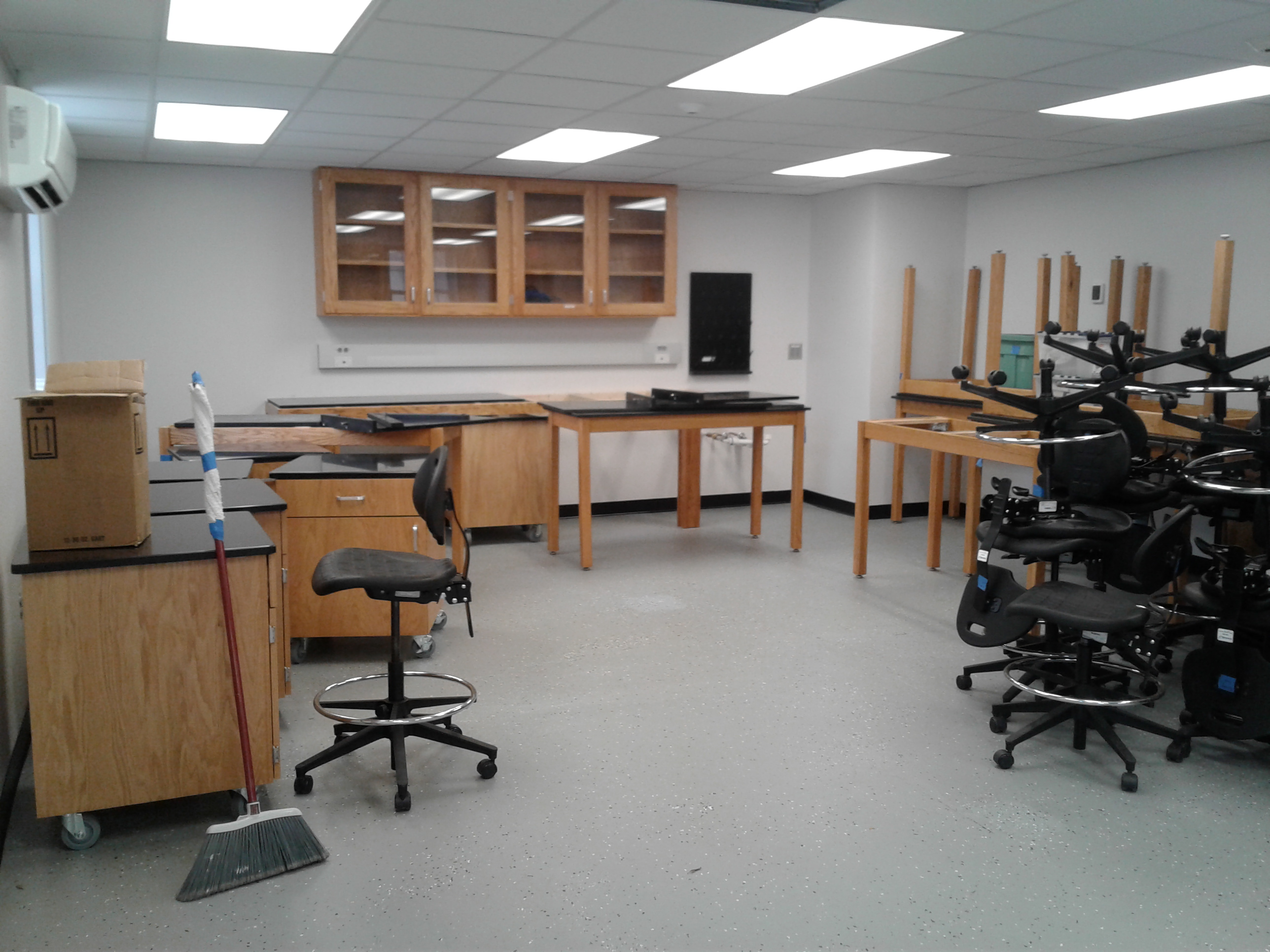
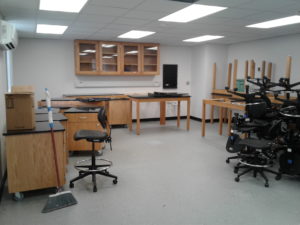
A clean, empty classroom or lab with wooden tables, chairs stacked on one side, a mop, boxes, and cabinets against the walls shows signs of recovery after Hurricane Irma.

Restoration nearly completed in the teaching lab (as of Feb 9, 2018). Electrical utilities were removed from the floor, the floor tiles have been replaced with an epoxy finish, and the bottom two-feet of the walls have been replaced, and the walls have been painted. New electrical outlets will be installed in the ceiling and new flood-resistant cabinets will be installed.

The Bad News:

On September 11, 2017, the University of Georgia’s Marine Institute was flooded by storm surge caused by Hurricane Irma.  Three-quarters of all the buildings on the campus were affected (16 buildings and several small out-buildings), including research laboratories, teaching facilities, dormitories, faculty/staff housing, administrative offices, Facilities Maintenance shops, the small boat hoist, and dining facilities.  The depths of floodwaters inside buildings ranged from one inch to one foot.  This seawater flooding damaged or destroyed flooring material, cabinetry, interior sheetrock wallboard, low-lying electrical outlets, furniture, and laboratory & office equipment.  (See earlier post on Hurricane Irma damage.)

The core campus buildings at the University of Georgia Marine Institute were built in the mid-1930s.  These buildings were originally part of a livestock farm operation built by R.J. Reynolds, Jr. (Reynolds established the UGA Marine Institute and converted the buildings to meet the needs of the scientists in 1953).  Since the time that these buildings were constructed, sea level on the Georgia Coast has increased approximately 10 inches.  This is the first time that buildings on the UGAMI campus have been damaged by flooding.

Hurricane Irma caused a major disruption to UGAMI’s research and education work.  Many of the Institute’s 21 permanent staff members have been displaced from their offices, laboratories, and workshops (for 150 days and counting, as of this writing).  Four temporary office trailers were brought to the UGAMI campus by barge to accommodate the administrative staff.  In addition to the permanent staff that were displaced, research and education programs have been interrupted.  Each year, dozens of research scientists and 600-700 students come to UGAMI to study coastal ecosystems.  Fall is the busiest time of year for class visits.  In 2017, UGAMI was essentially closed to visiting class groups for the entire fall semester.


The Good News:

UGAMI is getting back on its feet.  In late December, 50% of UGAMI’s student housing was re-opened, allowing a partial restoration of its educational programs (The other 50% of student housing units remain unavailable to students because they are occupied by construction crews who are performing storm restoration work on campus.).  Staff/faculty housing in Shell Hammock has been restored and the seawater lab is back up and running.  The teaching lab and visitors’ labs are nearing completion. Restoration work of all buildings, except for the administration office building and Carriage Building, should be completed within the next month.


See photos of Hurricane Irma Restoration work Here.

Spring tides and Ice storms

A paved road leads to a sign with lighthouse illustrations, surrounded by trees covered in ice from recent ice storms on a clear day.Spring tides are the highest tides of the monthly lunar cycle, and this month’s spring tide was one of the highest of the year (sometimes called a “King Tide”).  By coincidence, this spring tide corresponded with a very rare ice storm on January 3rd; something that hasn’t occurred on this part of the Georgia Coast in over two decades.

The storm prompted the Sapelo Island ferry to shut down for over 24 hours and UGAMI to close for two days.  The spring tide, which was accentuated by high winds, caused minor flooding in particularly low-lying spots such as Shell Hammock Road and Beach Road.  Tree limbs bowed under the weight of the ice, many crashing to the ground. The electricity flickered on and off throughout Wednesday morning, and finally gave out at about noon.  Power remained off for 28 hours, as the temperature plunged to the low 20’s F.  UGAMI’s backup generator kept the lights and heat on in the main lab building, which became a refuge for many of Sapelo Island’s inhabitants.  UGAMI staff and other island residents gathered to warm up and watched a Harry Potter movie in the auditorium on Wednesday night; a few people opted to spend the night in the auditorium and library rather than to return to their cold, dark homes.

In the end, the ice storm and spring tide created minor inconveniences on Sapelo Island.  No significant damage occurred and everything was back to normal by the next afternoon. And it offered a good excuse to take a break, admire the frozen beauty, and watch a movie with friends and neighbors.

See our photo gallery of ice storm images.


Seafaring gators connect marine and freshwater habitats

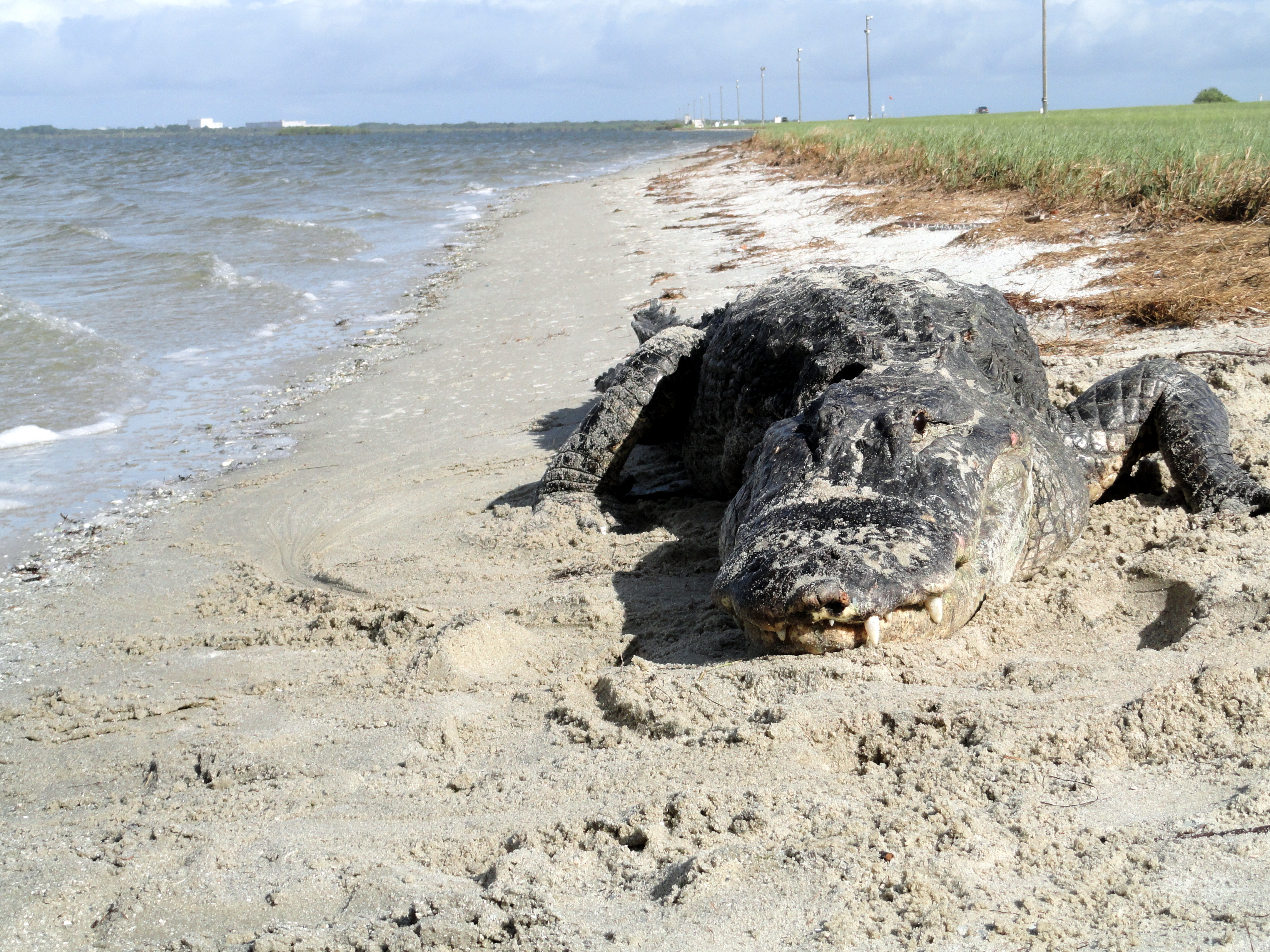
A large alligator lies on a sandy beach near the water’s edge, blending the mystery of seafaring gators with freshwater habitats, as grassy land and utility poles stand tall in the background.

Adult American alligator on the beach at Sapelo Island. Photo by James Nifong.

Research conducted at UGAMI shows that American alligators are an important link between freshwater and coastal marine ecosystems.  James Nifong and Brian Silliman, part of the NSF-funded Georgia Coastal Ecosystem – Long-Term Ecological Research Program, used radio telemetry and GPS trackers to follow the movements of alligators, and discovered that they spend a lot more time in marine environments than previously thought. Their research demonstrates that gators are an important ecological link between freshwater and coastal marine systems.  See a description of Nifong and Silliman’s work on the NSF website.

Hurricane Irma Hits UGAMI

Hurricane Irma hit UGAMI pretty hard.  About ¾ of our buildings had some storm surge flooding, including research & teaching labs; the BIRL dormitory; The Powerhouse (lecture hall/dining hall/kitchen); administrative offices; electrical, auto & carpentry shops; houses; and storage facilities. The main lab and nearby buildings suffered the worst damage, with over a foot of water inside. Electrical power to Sapelo Island was out for a week.

The good news is that none of our vehicles, vessels, or vital instruments were damaged.  The UGAMI campus is a mess but the contractors are already well into the cleanup/restoration process, so we should be back operating at 100% capacity by Thanksgiving.  We’re also trying to use this as an opportunity to improve some facilities and make them less prone to flood damage in the future.  It’s a setback, but it’s temporary, and we’ll come out of it stronger in the end.

Floodwater from Hurricane Irma covers the ground up to buildings and posts with chain barriers at UGAMI; timestamp shows 09-11-2017 at 12:22:48.

The scene outside the BIRL dormitory at the peak of the storm surge.

See more images of Hurricane Irma’s effects on UGAMI and Sapelo Island in our Photo Gallery.

UPDATE, 11:00 AM 9/7/17: UGAMI Closing for Hurricane Irma

The Governor has just ordered a mandatory evacuation for Georgia’s barrier islands. To comply with this order UGAMI will be officially moving its closure to 4:30 PM today. We will remain closed through at least Tuesday Sept 12. Check back at this web site for further updates as the situation unfolds.

UGAMI Closing for Hurricane Irma

Due to the approach of Hurricane Irma, UGAMI will close at 12:00 pm on Friday Sept 8 and remain closed through at least Tuesday Sept 12.

A state of emergency has been declared for the coastal counties of Georgia, including McIntosh. The eye of Hurricane Irma is forecast to pass just east of Sapelo Island on Monday afternoon. Regardless of the path that the storm takes, Sapelo Island will likely experience high winds, heavy rain, and storm surge.

UGAMI staff members have been working for the past few days to secure the facilities and preparations are being rushed to completion. The staff will return to Sapelo Island to assess any potential damage as soon as it is safe to do so. Information about UGAMI’s re-opening will be posted on this web site.

12th Annual Sapelo Island Lighthouse 5K Run

A large group of people pose in front of a decorated fire truck on a sunny day at the Lighthouse 5K on Sapelo Island, with some sitting, standing, or kneeling, and a dog present in the front row.

Participants, spectators, and organizers of the 12th Annual Sapelo Island Lighthouse 5K Run


One of the Independence Day traditions on Sapelo Island is the Sapelo Island Lighthouse 5K Run.  The race course goes from the Nannygoat Beach Parking Lot to the iconic Sapeolo Lighthouse and back to the beach.


GCE LTER technicians dominated the field of 30 participants (28 humans and 2 dogs).  Dontrece Smith jumped out front early and built a 100-m lead by the turn onto Lighthouse Road.  His labmate, Alyssa Peterson, started out conservatively, running an even pace throughout the race and steadily working her way up through the field. She passed Dontrece by the halfway mark and kept widening her margin of victory over the second half of the course.


Special recognition goes to the members of the University of Florida’s GCE LTER research team, led by graduate student Sinead Crotty.  After finishing the race, they all went back to work on their field experiments in the marsh.  While most of the runners were recuperating on a couch or lounge chair, Sinead’s crew was performing physical labor in mid-day heat, all in the name of science. That’s dedication!

UGAMI Staff Appreciation

On Thursday, May 11, the staff of UGAMI gathered for our annual staff appreciation.  Even that infamous pirate, Captain E.C., was in attendance.  There was much merriment and cake, too.

A group of people poses indoors for a photo under a sign reading UGAMI Staff Appreciation Day 2017, celebrating UGAMI staff appreciation with a pirate-themed edited figure on the right.

UGAMI Staff 

Sapelo Island’s remote location often means that extra effort is required to get things done.  This group goes the extra mile, every day.

UGAMI installs new seawater system

With funds from an NSF Field Stations and Marine Laboratories grant, we completed renovations of the systems supplying water to UGAMI’s seawater laboratories.  These facilities allow us to maintain a large variety of tanks and aquaria for studying marine organisms in a controlled setting. The new system is far superior to the one it replaced.  It can supply up to 75 gallons of seawater per minute; monitors the creek level and only runs the pumps when the intakes are submerged (preventing damage caused by the pumps running dry); incorporates five 3,000-gallon modular storage tanks to supply seawater at low tide (when the pumps are off); actively manages the pressure in the seawater line to maintain consistent flow; and provides several filter options, including bag filters, a radial flow settler, bead filter, and in-line UV sterilization, so we can supply seawater to suit the needs of any research user. In addition, we have just taken possession of three 1,000-gallon tanks for maintaining and studying larger fish and two 8’ sink trays for washing and processing samples of marsh plants.


Large cylindrical water tanks for the UGAMI seawater system are positioned beside a white building with a red roof, surrounded by pipes and construction materials, with trees and a cell tower in the background.

Rotary settler (left) and five 3,000-gallon holding tanks. Once the tanks, filters, pumps, and plumbing were completed, this entire system was enclosed under a new structure.

Three large white cylindrical tanks, part of the UGAMI seawater system, feature blue interiors and sit outdoors on grass near water, with trees and tall wooden posts in the background.

Fresh off the boat! Three new 1,000-gallon tanks were just delivered to UGAMI aboard the R/V Spartina. These tanks will be used to study larger fish.