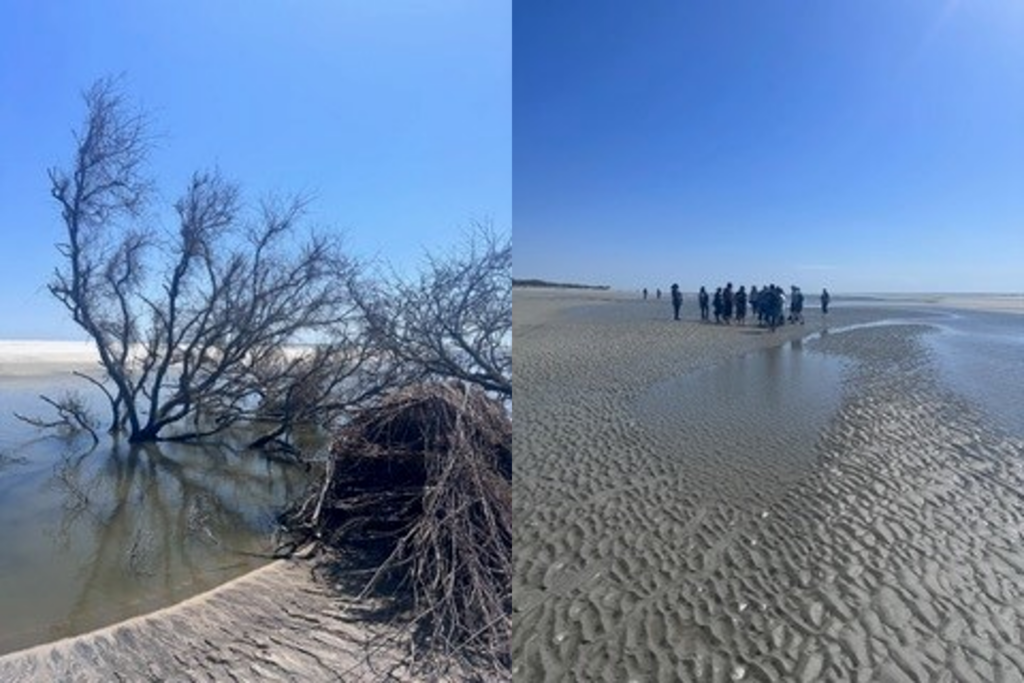
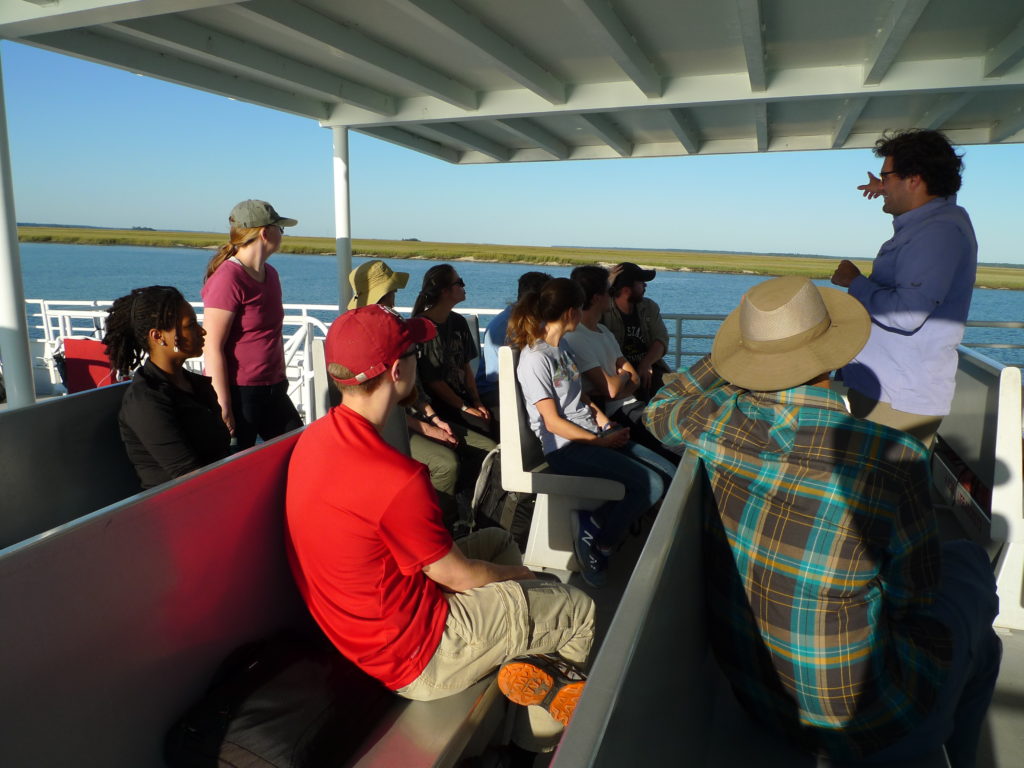
Photos from The Ocean Memory’s Project visit to Sapelo
The Ocean Memory Project , a growing group of thinkers spanning divergent scientific and artistic practices who work to broaden understanding and awareness of ways in which the ocean retains, expresses, and loses memory, recently hosted a workshop at UGAMI, organized by UGA Professor Mandy Joye, focused on the topic of memory loss in relation to system processes and human memory.
They had formal presentations (at the Institute, in the field, and during nature walks), structured and unstructured discussions, creative activities, and immersive experiences on the island with free time to connect with other participants.
The presentations covered a range of scales upon which biological systems communicate and remember – from molecules to ecosystems and coastlines. Speakers covered topics ranging from human history and memory, including a focus on historical and modern human populations on Sapelo Island; the geological history of barrier islands; the role of chemical signaling in memory; the role of story-telling and science writing in ocean science communication; the impact of natural disasters on ecosystem dynamics, including stress-hardening and ecological memory in corals; and pollution and system memory loss resulting from the Gulf of Mexico Deepwater Horizon oil spill.
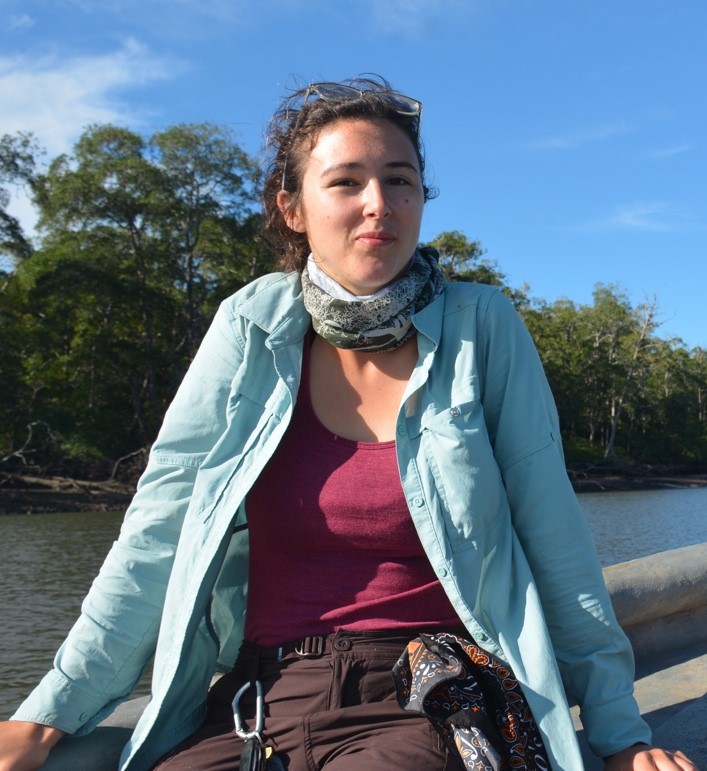
Our new Scientist-in-Residence, Dr. Emlyn Resetarits
We are very excited to announce Dr. Emlyn Resetarits will be joining UGAMI as our inaugural Scientist-in-Residence. Dr. Resetarits has been teaching as part of our Marine Biology Spring semester for several years and will be joining the UGAMI faculty full-time in Spring 2023. She has already begun setting up her research in a dedicated space in the newly renovated north wing of the main lab. We welcome Dr. Resetarits and her research to UGAMI and are truly excited about the research opportunities and wealth of knowledge she brings to our students and research community.
A little bit more about Dr. Resetarits:
She received her PhD from UT-Austin where she investigated how environmental variables influence parasite community assembly across spatial and organizational scales, focusing primarily on salt-marsh ecosystems. She continued her research at the Odum School of Ecology at UGA in the Byers Lab where she combined field surveys with lab and field manipulations to quantify the role that parasites play in aquatic ecosystems.
Dr. Resetarits’ work provides valuable insight into how parasites interact at the ecosystem level and how behavior and community-level dynamics may contribute to those interactions.
Please join us in welcoming Dr. Resetarits to our community! We look forward to hearing more about what she uncovers in the marsh.
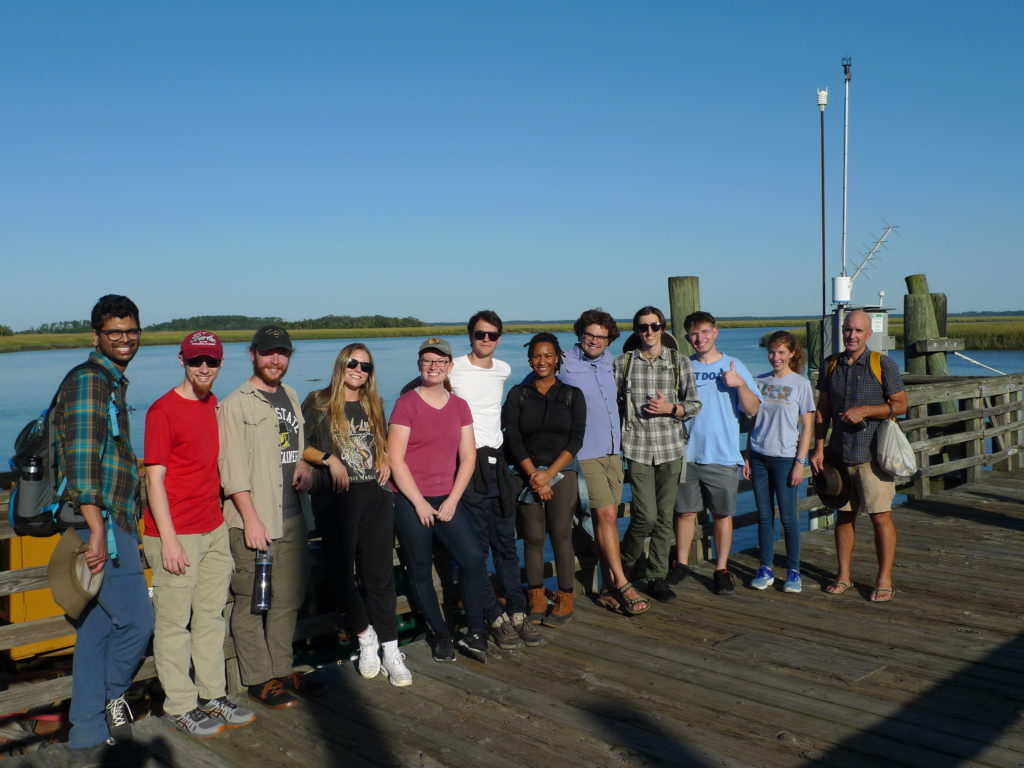
The new cohort of PhD students from the Odum School of Ecology visited this month for a whirlwind tour of everything UGAMI and Sapelo Island has to offer young ecologists!
This post comes to us from the trip’s organizer and faculty member at Odum, Dr. Ford Ballentyne:
ECOL8000 Field trip
The field trip is an integral component of ECOL8000, the only required class for PhD students in Ecology. It is an intense, but fun, long weekend during which students conceive and conduct research projects, and present their results. All attendees (students, faculty, and teaching assistants) travel together, stay in the same accommodations, and cook and clean up together. One of the goals is for the students to bond and develop a sense of a cohort early on in their graduate careers. In prior years, the class went to Coweeta Hydrologic Laboratory, but we decided to try Sapelo/UGAMI this year.
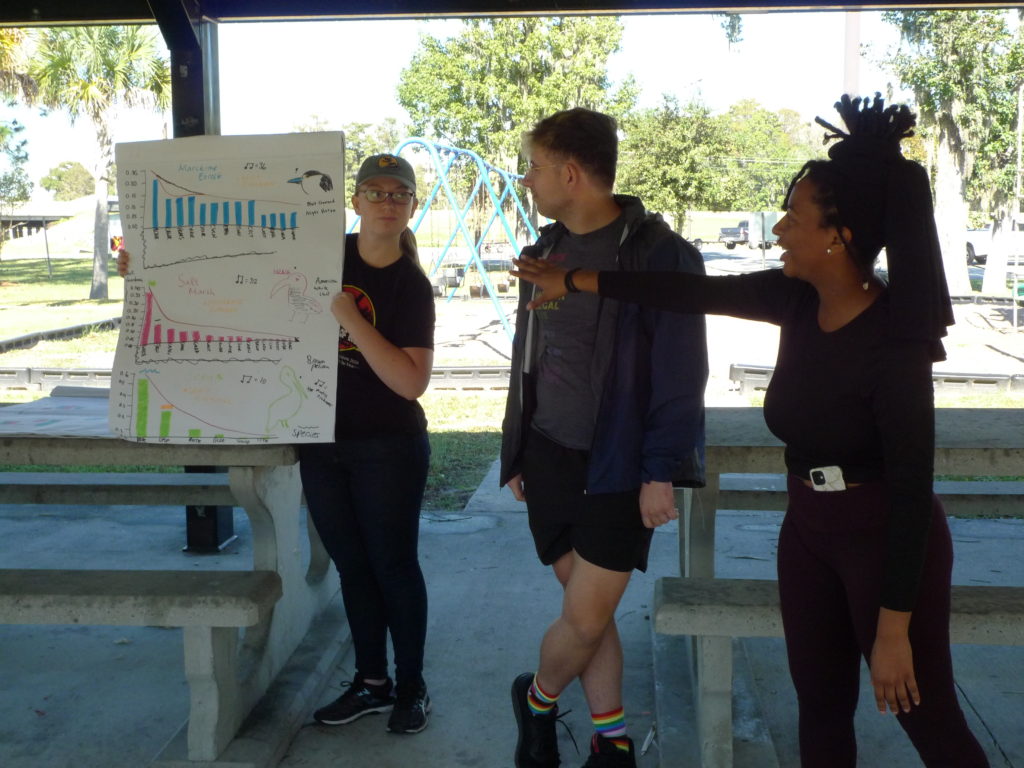
The primary focus of the field trip is the research project. In groups, students must make some initial natural history observations in an unfamiliar setting, and then translate their observations into research questions and data collection schemes in a matter of hours. They present their proposed projects to the rest of the class and receive feedback shortly thereafter. Incorporating this feedback, the groups refine their questions and plans for data collection, and begin collecting data the morning after formulating their plans, having a single day to collect data, with minimal technology. The aim of the research project is for students to design projects that address an interesting ecological question or observation, collect data that will address the question with rudimentary techniques (simple measurements and counting) and significant time limitation, and then synthesize, analyze (with minimal computation and statistical analysis), and present their data and conclusions. They have to balance the quality of their questions with the constraints on data collection and analysis to arrive at some clear and, hopefully, compelling patterns and conclusions.
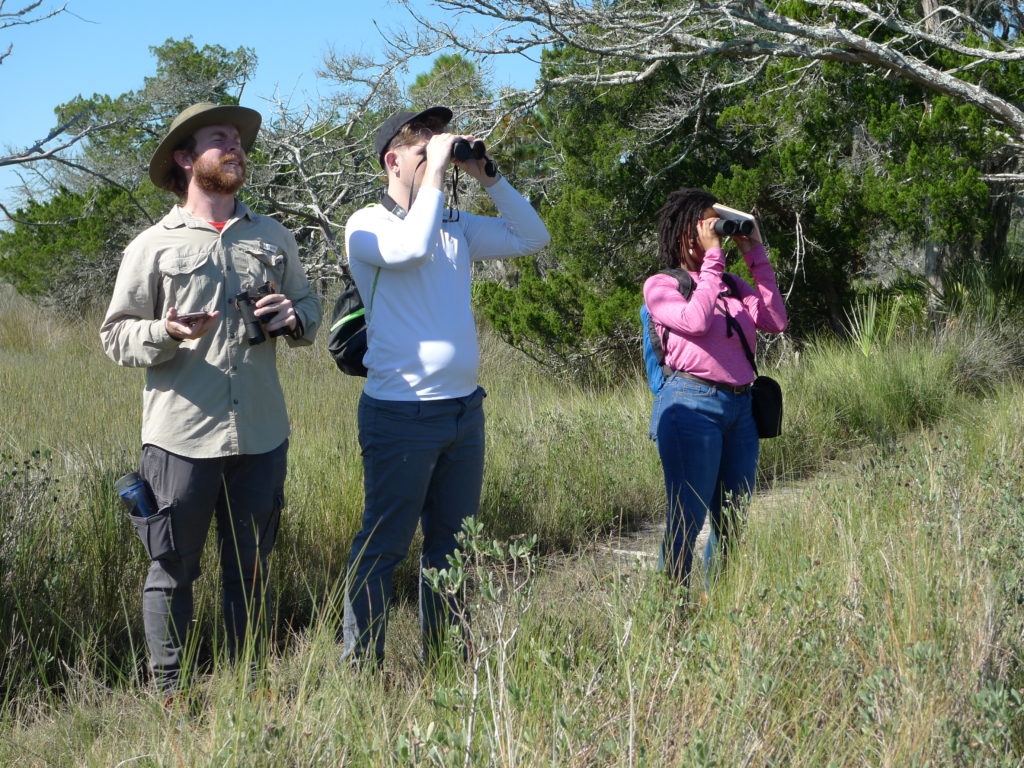
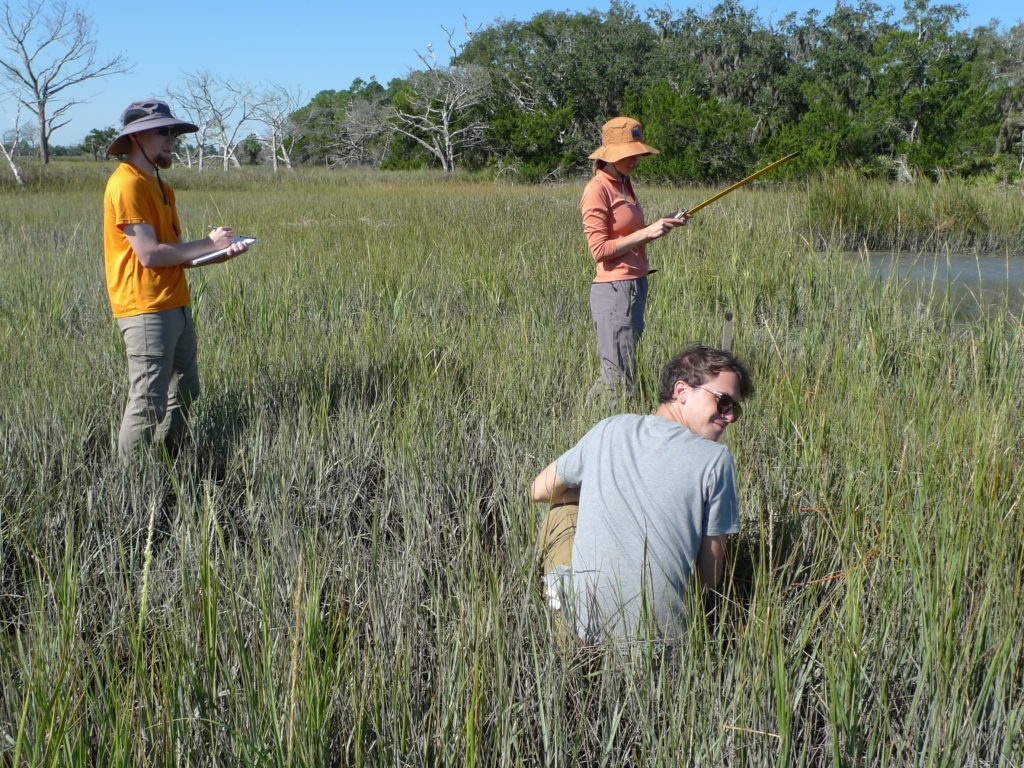
During the 2022 field trip to UGAMI on Sapelo Island, two groups focused on snails and one group focused on birds. One snail group was interested in characterizing the relationship between snail density, radulation scarring, and plant performance. The other snail group was interested in characterizing how the height at which snails were found on spartina stalks was impacted by snail density, distance from tidal creek, and snail body size. The bird group was interested in characterizing how patterns of relative abundance of birds differed between maritime forest, marsh, and beach habitats. The snail groups tromped around the high marsh with measuring tapes, meter sticks, and calipers to collect their data, and the bird group used both visual and audio surveys in the three habitats of interest. The radulation snail group found an interesting pattern of increased total radulation scarring at an intermediate distance from the tidal creek, the snail height group found that snail body size was significantly higher with distance from the tidal creek, and the bird group found very different patterns of relative abundance and species richness across the three habitats sampled.
Because of the history of human interactions on Sapelo Island, and especially those between scientists, primarily associated with UGA, and long-term residents, we had Nik Heynen, Professor of Geography at UGA, speak to the class prior to the field trip about his work with Hog Hammock residents, which resulted from involvement with the Georgia Coastal LTER site at UGAMI. While on Sapelo, we were fortunate to have Josiah ‘Jazz’ Watts talk to the class about race, power, discrimination, and science on Sapelo and the GA coast more generally.
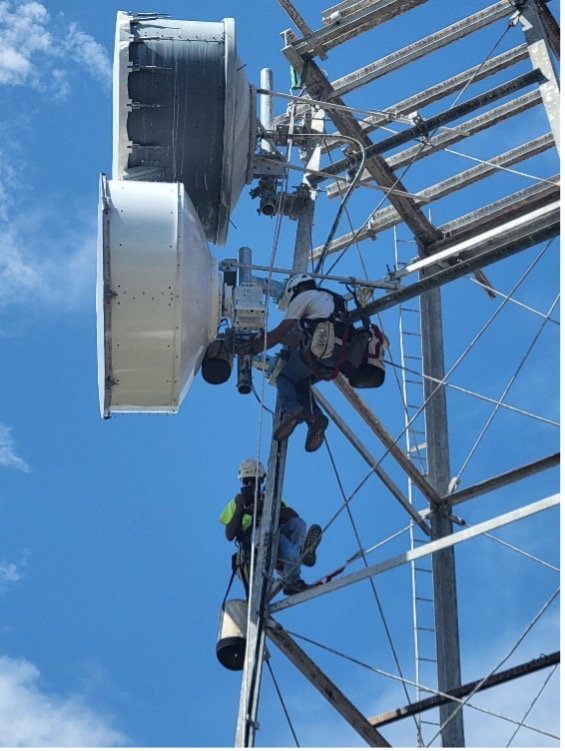
The sole broadband connection to Sapelo Island consists of a microwave link that exchanges data with the mainland, approximately 9 miles away. The microwave radios that had been on the tower since 2012 were installed as part of a partnership between UGAMI and Darientel, which is the network provider for the Island. The system was showing its age and was frequently at capacity, as the bandwidth shared by the entire Island was only 300 Mbps (150 Mbps in each direction). This resulted in bottlenecks and disruptions in internet service. However, that has now changed!
This past month we again partnered with Darientel and replaced the old system with modern radios that use new technology. The upgrade increased the bandwidth by 8-fold, to 2,400 Mbps. This makes a huge difference for us: for example, instead of taking ~2 hours to upload drone imagery it now takes more like 12 minutes. It also means we can support internet use and video conferences without interruptions. The increased capacity benefits not only UGAMI but also broadband users throughout the Island. We are very grateful to the UGA Office of Research, which provided the UGA portion of the funds for this improvement.
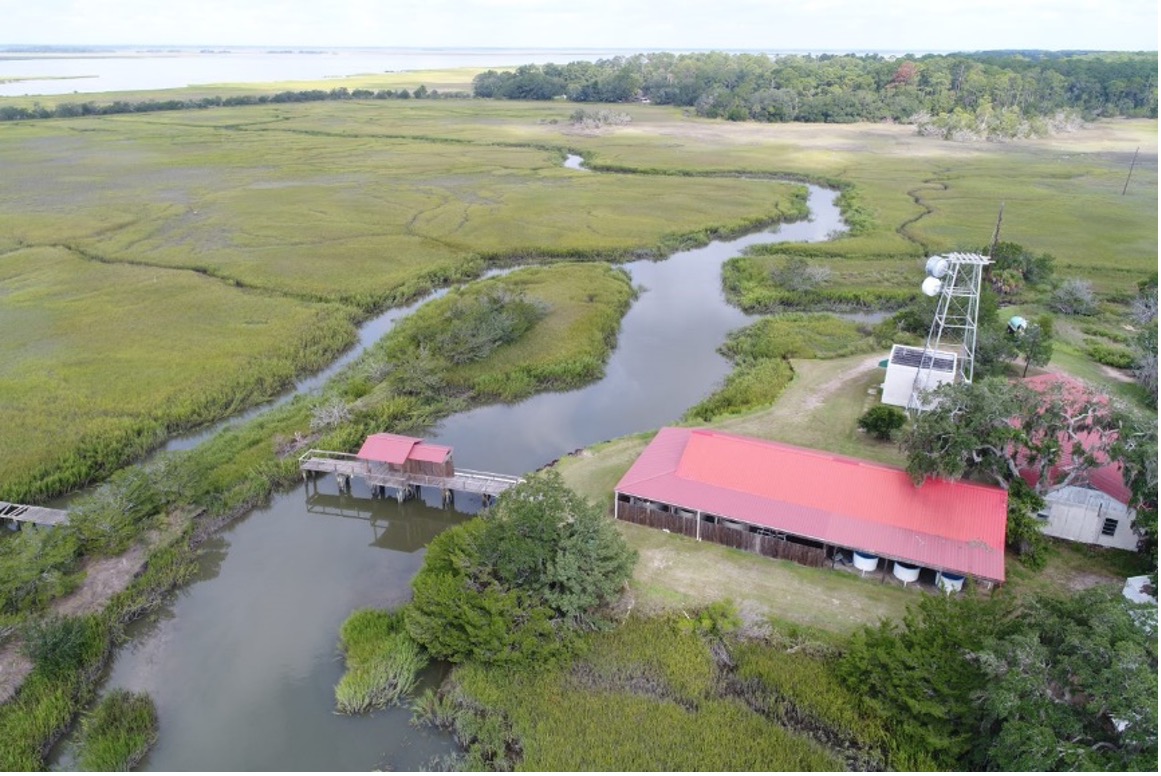
The microwave tower is located on South End Creek on the UGAMI campus.