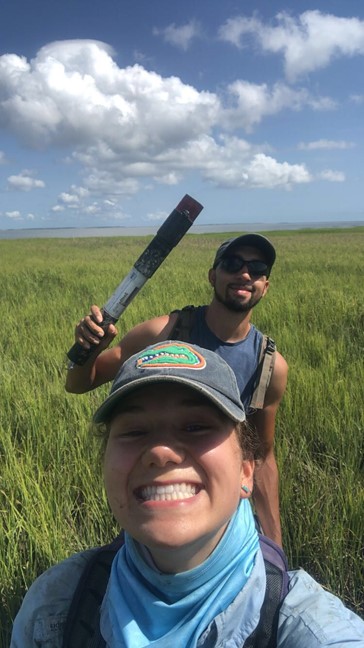
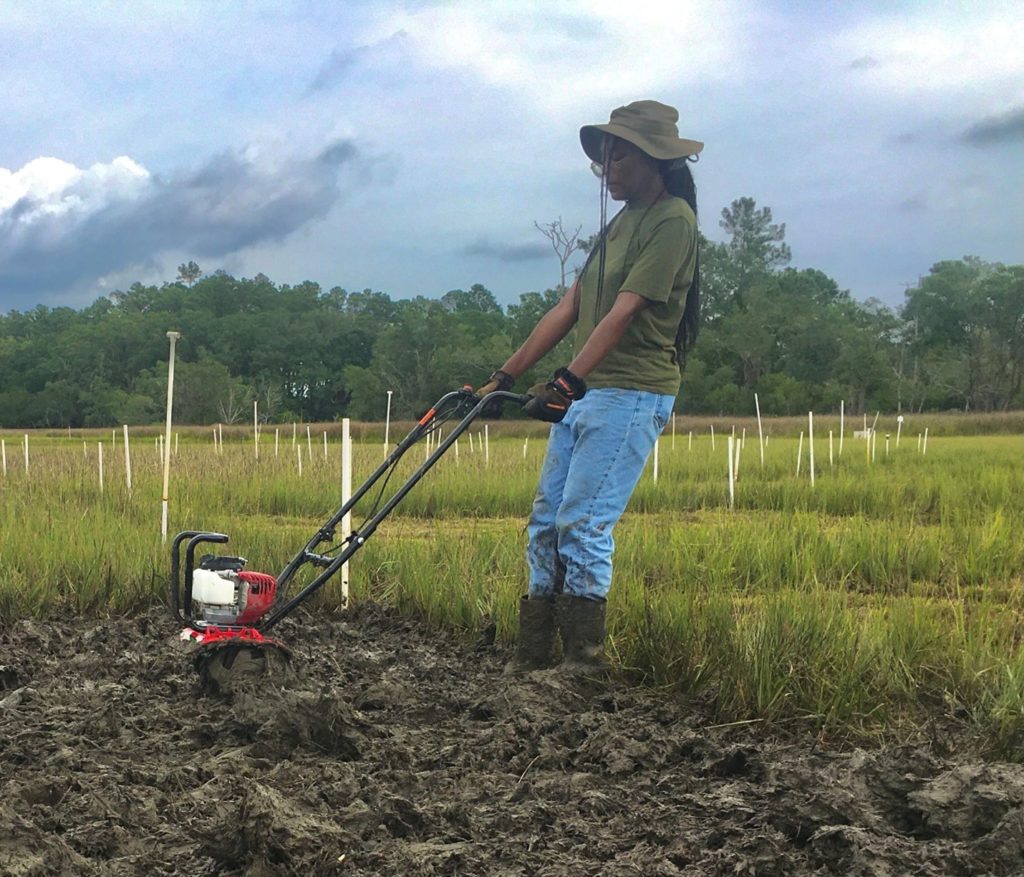
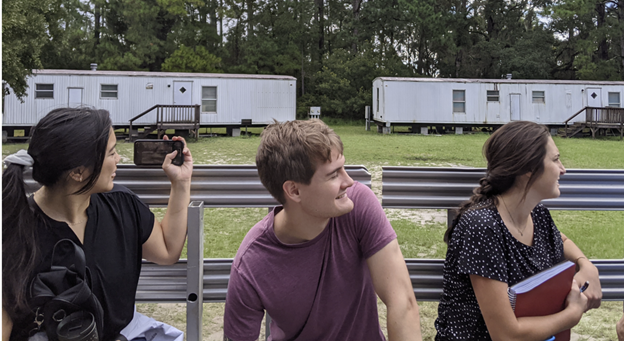
It’s going to be a busy summer at UGAMI! Last week, we hosted our annual barbecue to welcome our summer visitors.
Drs. John Schalles (Creighton) and Steve Pennings (UH) are back for another summer, as are graduate students Matt Pierce (UGA), Harrison Currin (GSU), and Tommy Pudil (GSU) .
We also have a group of interns joining us to work with GCE investigators. They hail from institutions across the US including Creighton University, University of Houston, University of South Carolina, Eckerd College, and University of North Florida.
We are also looking forward to the arrival of a new cohort of students for UGA’s Coastal Summer Semester, who will be here this weekend along with Drs. Emlyn Resetarits and Charles Hopkinson. We’re looking forward to a productive summer, and it feels great to see so many new (and returning!) visitors.
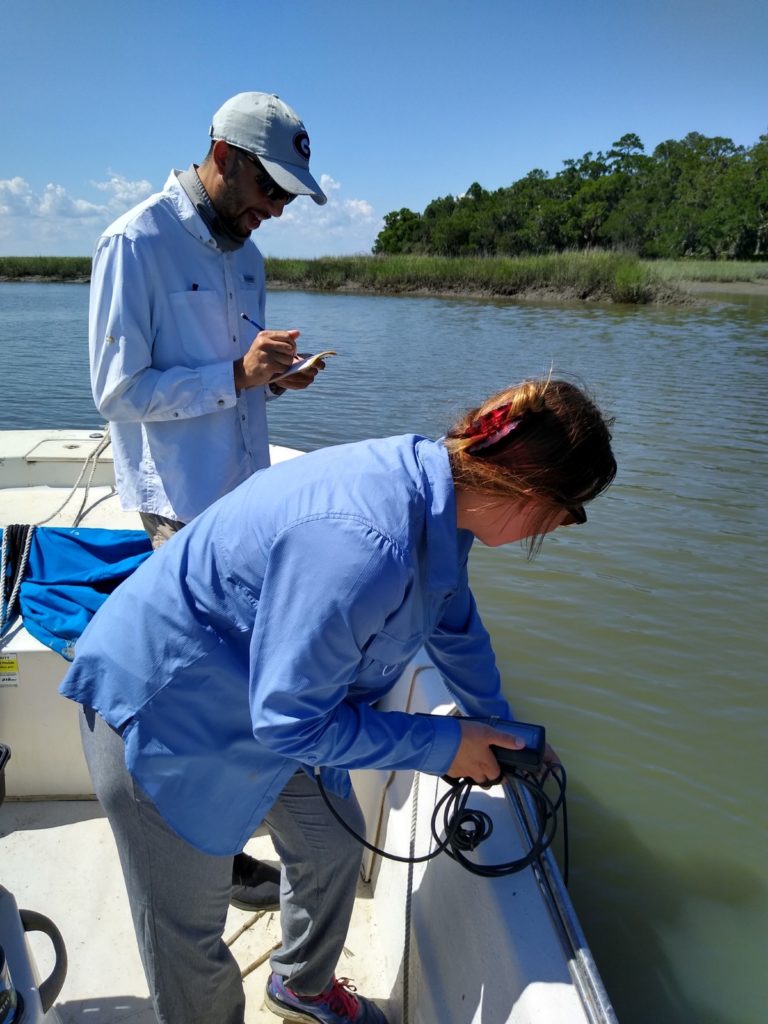
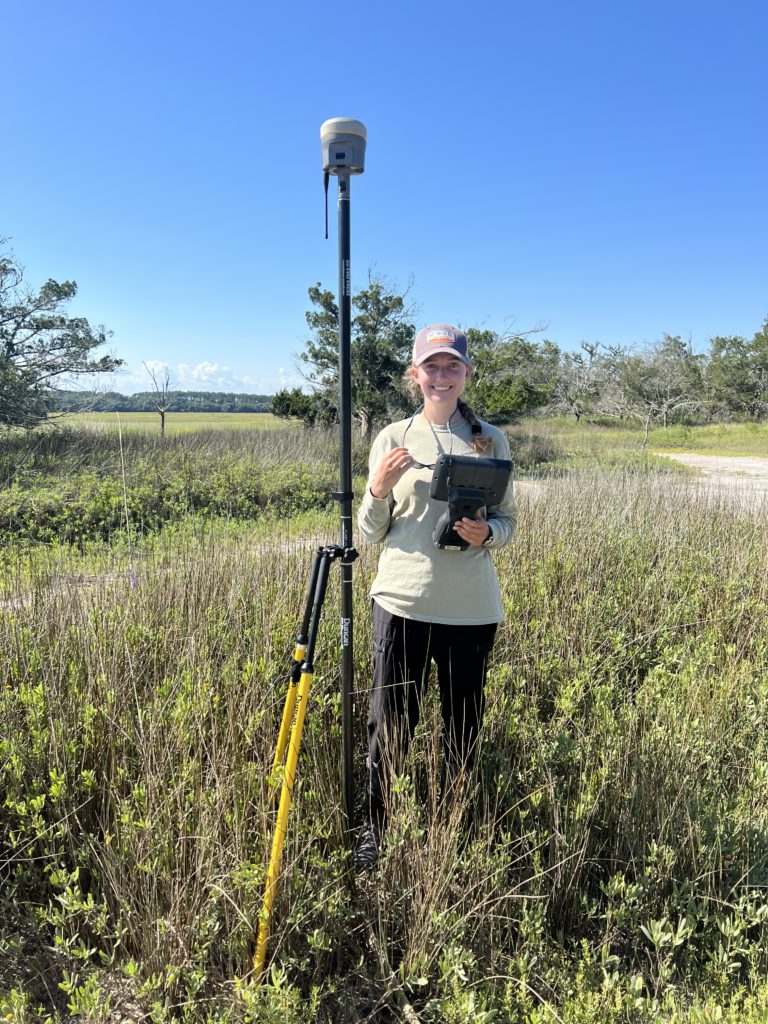
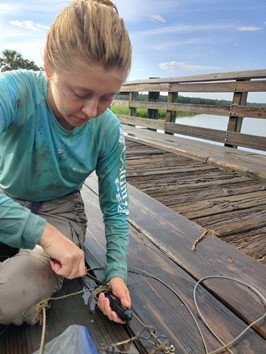
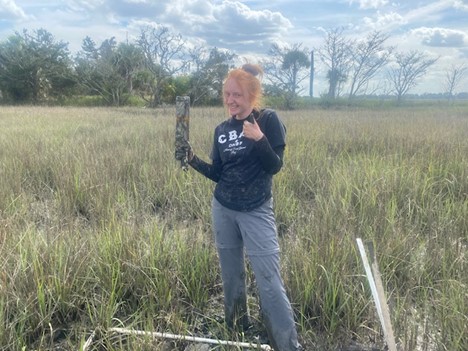
Graduate Student Matt Pierce (UGA) and Summer Intern Addie Band (Eckerd College) measuring water quality parameters. Summer Intern Gabby Gagnon (U of South Carolina) learning how to use the RTK.
The Georgia Coastal Ecosystems Long Term Ecological Research program (GCE LTER) seeks a Research Professional to assist with coastal ecology research on the Georgia coast. This person will serve as lead technician and manager of a field crew in performing research in a wide range of disciplines including water quality, remote sensing, soils, climate, and wetland plants and animals. The Research Professional will serve as the primary contact for visiting researchers, oversee maintenance and operations of equipment, manage data submissions, and perform other research administration tasks. The position requires at least a baccalaureate in a related field but those with a master’s degree and relevant experience will be the most competitive. Ideally, the candidate will have prior experience with small boat operations, field research, scientific instrumentation, drone piloting, and personnel management. Physical Demands: The position will occasionally require strenuous physical activity and irregular hours. Much of the work is done outdoors in hot, muddy, and buggy conditions. The position is based at the University of Georgia Marine Institute on Sapelo Island. Work Hours: Generally, 8:30 – 5:00 M – F; although field work may require early or late hours and occasional weekends. Apply by May 31 for full consideration.
UGAMI hosted the annual meeting of the Southern Association of Marine Laboratories (SAML). SAML is a regional chapter of the National Association of Marine Laboratories (NAML). SAML’s Member institutions range geographically from Maryland through Texas, including Bermuda.
The mission of SAML is to promote collaboration among member institutions; encourage the wise use and conservation of marine and coastal resources; demonstrate the importance of marine research and education to the economy and to society; facilitate marine and estuarine research on a regional scale; and provide a forum for developing solutions to common challenges facing marine laboratories in the region.
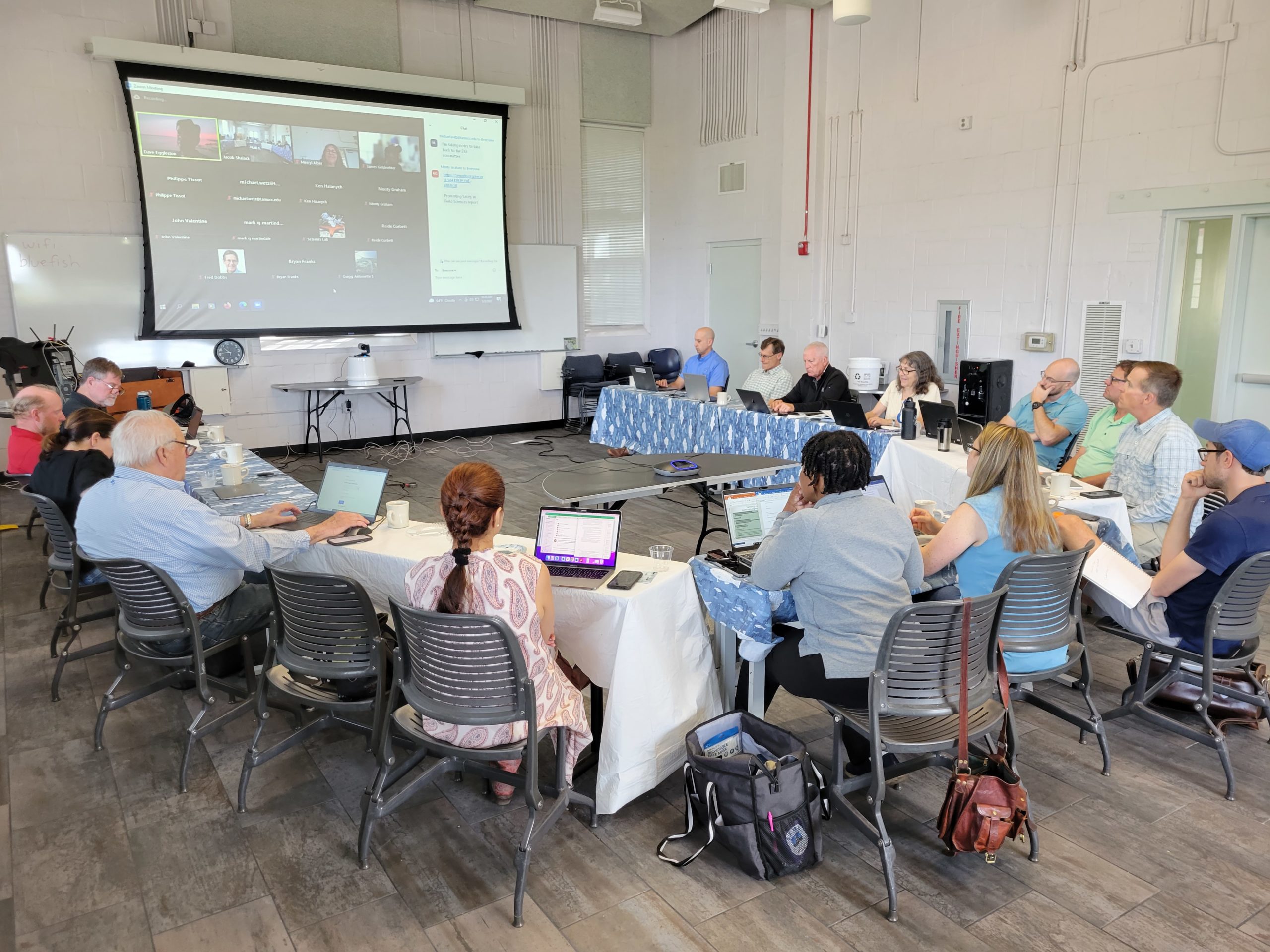
SAML meetings are held annually each spring. UGAMI was supposed to host the meeting in 2020, but that meeting was postponed twice due to COVID 19. The meeting used a hybrid format with approximately half of the participants attending in-person and the remainder logging-in remotely.
The meeting agenda included updates on new infrastructure and programmatic developments at each member laboratory; an update on the outlook for scientific funding and federal public policy; and a round-table discussion on ways to improve safety in the field and ensure that our laboratories are welcoming to people of all backgrounds.
It is great to spend time with fellow administrators and faculty from marine labs across the region, talking about the work for which we all feel such passion.
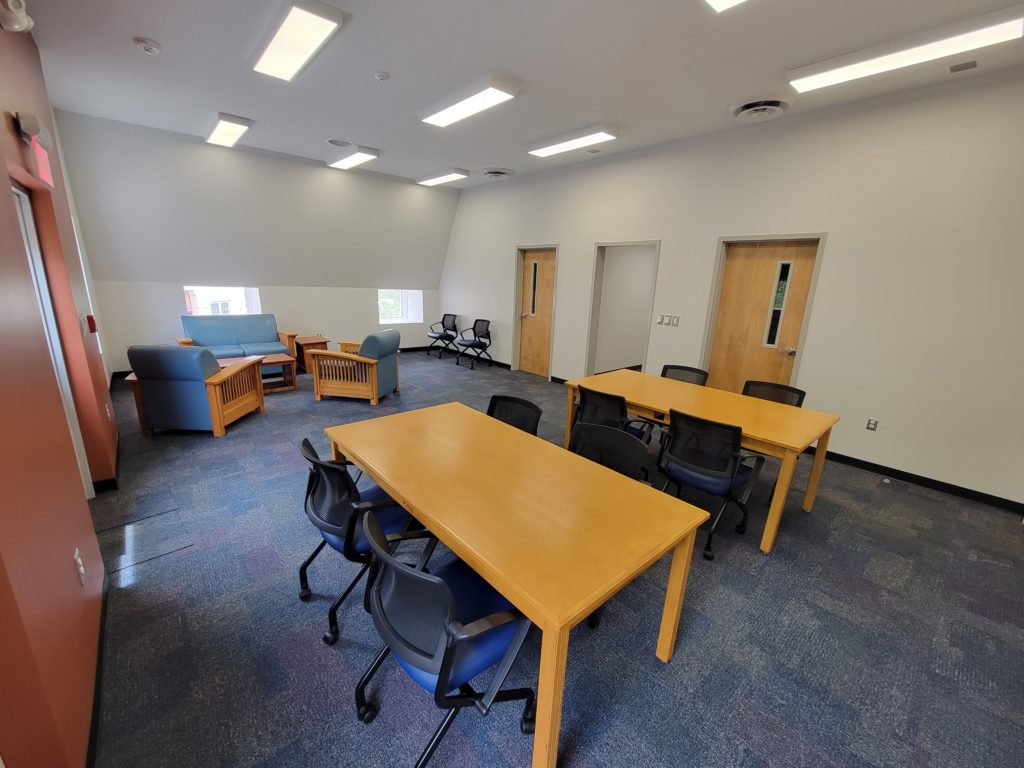
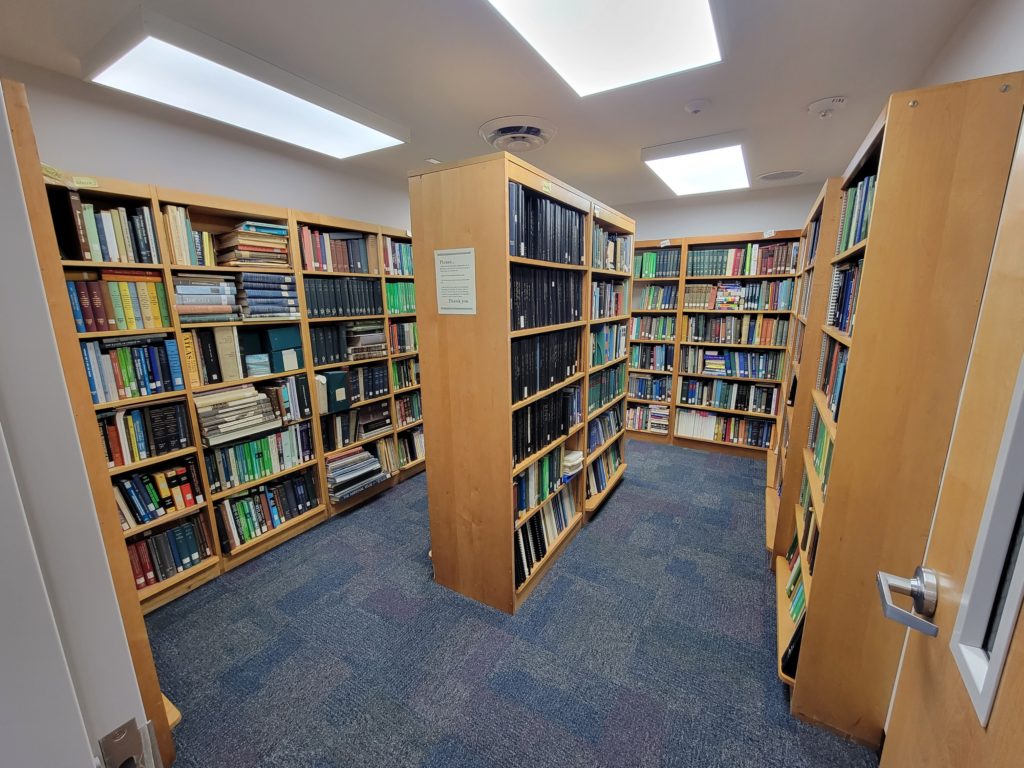
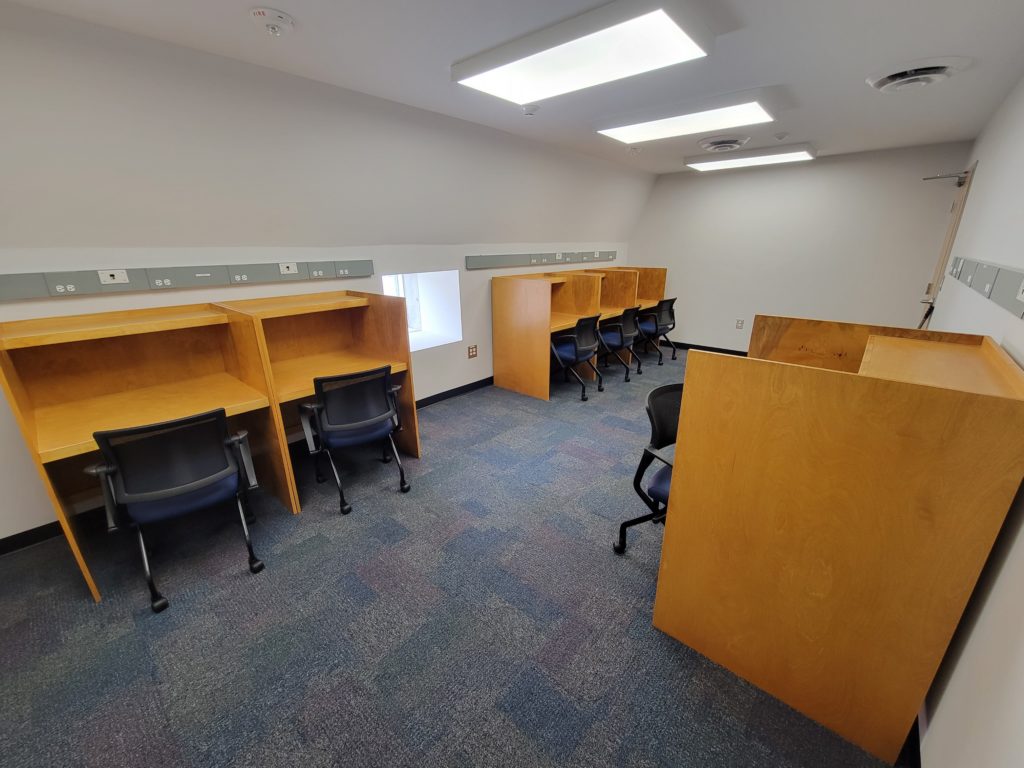
We have recently completed renovations of the library wing of the main lab. This building was originally constructed in the 1930s as a dairy barn. When UGAMI was founded in 1953, the dairy barn was converted into a laboratory. The goals of this renovation project were to bring it up to modern building codes, improve aesthetics, and to optimize spaces to serve our strategic needs. These new renovations complete the third phase of the first major renovation of the building since it was converted from a barn in 1953. Improvements include removing hazardous materials, improving life safety, and updating mechanical and electrical systems. The library is now a very inviting, open space with couches, tables, and general-use computers. The books have been moved into a well-organized stack room adjacent to the library. The other spaces in that wing now include modern offices for visiting researchers, study spaces for students, and a conference room.
This renovation project, the latest in a long list of recent improvements, will help UGAMI continue to be a world-class facility for research and teaching.
The Georgia Coastal Ecosystems – Long Term Ecological Research Program (GCE LTER program) seeks a research technician to assist with studies of coastal ecology. Work will involve studies of water quality, soils, and wetland plants and animals. This Research Technician II position is based at the University of Georgia Marine Institute (UGAMI) on Sapelo Island, GA. The selected individual will work with other technicians, faculty and students at the field site. Housing is available at UGAMI.
The minimum qualification for the position is an Associate’s degree and some relevant experience; however, candidates with 4-year degrees in an environmental field (Biology, Chemistry, Geology) and significant experience will be the most competitive. Candidates must be able to operate pickup trucks, and have basic computer skills, including experience with email, word-processing, and spreadsheet programs. Let us know if you have any of the following useful skills or training: US Coast Guard Captain’s license, small boat piloting experience, drone pilot license, drone piloting experience, GIS.
Physical Demands: The position will occasionally require strenuous physical activity and irregular hours. Much of the work is done outdoors in hot, muddy, and buggy conditions. Work Hours: Generally, 8:30 – 5:00 M – F; although field work may require early or late hours and occasional weekends.
The University of Georgia Marine Institute (UGAMI) is seeking to hire an Assistant Research Scientist who conducts research in Georgia’s coastal ecosystems. This is a “Scientist-in-Residence” position for a scientist who will live at the Institute (housing is provided). This is a limited-term position for two years, with the potential to add an additional year with approval. The position is targeted towards an early career scientist who has at least 1 year of post-doctoral experience and is within 8 years of having received their terminal degree. Possible research areas include (but are not limited to) habitat conservation, coastal restoration, ecosystems-based fisheries management, benthic ecology, and coastal water quality. In addition to research (70% time), the successful candidate will also be expected to help teach residential courses in their area of specialization and serve as an in-house resource for student research projects (20% time), and to deliver programming to schools and the local community (10% time).
Applicants must identify a faculty member to serve as a mentor for this position. Mentors do not have to be currently affiliated with UGAMI as long as their expertise is appropriate for the research being conducted, but they must be at UGA. A letter of invitation is required from the mentor that describes how the applicant’s proposed research fits into the sponsor’s area of expertise, the mentoring plan, and how they will support the proposed research (if funds or specialized equipment is needed beyond what is available to the applicant).
The annual salary for this position is $65,000, and the candidate will also receive up to $10,000 per year for professional travel (including to the main campus in Athens) and research supplies. The successful applicant is expected to be a full-time resident at the UGA Marine Institute on Sapelo Island for at least 75% of the year.
A complete description and application materials can be found at https://www.ugajobsearch.com/postings/244882. Applications received by March 18, 2022 are assured full consideration. The position has a target start date of August 2022. Inquiries should be directed to Dr. Merryl Alber, Chair of the Search Committee (ugamidir@uga.edu), with the subject line: “Scientist in Residence”.
The Georgia Coastal Ecosystems Long-Term Ecological Research program is recruiting for five paid summer internships in coastal ecology. Some positions are limited to students who have not graduated yet, but others are open. The deadline for applying is March 7. Follow the link for more information and to apply.
UGAMI is seeking to hire an Academic Professional to develop and provide oversight of the Institute’s residential instructional programs for University students. The candidate will also teach field courses in their area of specialization, mentor students conducting independent research, and serve on the UGAMI leadership team. The position is based primarily at the UGA Marine Institute on Sapelo Island, with travel to the UGA main campus in Athens and other destinations around the state (approximately one trip per month). Although it is possible to commute to Sapelo via ferry, residence on-site is required when programs are in session (including some weekends). Housing is available at the Marine Institute.
A Ph.D. in Marine Science or a related discipline is required for this position. A complete description and application materials can be found on the university’s faculty job portal http://www.ugajobsearch.com/postings/226765. Applications received by January 14, 2022 are assured full consideration. The position has a target start date of April 2022. Inquiries should be directed to Dr. Merryl Alber, Chair of the Search Committee (ugamidir@uga.edu), with the subject line: Academic Professional.
UGAMI saw several interns over the summer working on various GCE LTER projects. A few of the interns visited Sapelo for a week or two while others lived on the island for the entire summer. Here is what five of the interns had to say about their projects and Sapelo experience!
Sydney Speir
“My name is Sydney Speir and I am from Brookline, New Hampshire. I am a rising 3rd year at the University of Georgia studying Ecology and Sustainability. This summer I had the wonderful opportunity to work alongside Dr. Amanda Spivak and Gabriella Giordano studying biogeochemistry at the GCE-LTER site on Sapelo Island, GA. We sampled multiple ongoing projects including DisturbanceScape, Predex, and DRAGNet, all of which aim to describe the way in which various saltmarsh disturbances impact saltmarsh functioning. Most of my work focused on studying decomposition rates, chemical characteristics of porewater, and organic matter within the soil. Since saltmarshes account for a huge portion of terrestrial carbon, it is crucial to understand how they react to disturbances, both natural and anthropogenic. The more we can describe these processes of disturbance and recovery, the better we can preserve these highly valuable ecosystems for future generations.
After I complete my B.S. in Ecology and Certificate in Sustainability, I plan to pursue a PhD in Integrative Conservation. I then hope to work for a non-profit or governmental agency, using my ecological background to manage conservation efforts on local levels. The GCE internship gave me invaluable experiences, knowledge, and connections, but most importantly, an appreciation for the beauty and complexity of saltmarshes that I will carry with me forever.”
Matt Pierce
“I am originally from a small town in southern New Jersey named Millville. I just graduated from Rowan University with a BS in Biological Sciences and a BA in Environmental Science. I worked as an intern with the field technicians in the Georgia Coastal Ecosystems LTER office. While interning I worked with Dontrece, Elise, and John who work as the field technicians for UGAMI and the LTER.
While working at UGAMI, I was able to help the field technicians collect data and prepare research experiments for researchers working on the island from multiple areas on and around the Sapelo Island. I helped clean MicroCAT sondes along the Altamaha and Sapelo rivers with John and Dontrece. During the water quality cruise up the Altamaha River Elise and I collected water samples to measure pH and other chemical compounds within the water column. During the cruise we used multiple instruments to sample water quality metrics along the river. The MicroCAT and water quality data goes into a large dataset used by the LTER to generate accurate models of the water systems flowing into the Atlantic along the river systems. This work is important as it helps us understand what factors along the systems may be altering water quality and the biotic factors within these systems such as chlorophyll densities. While interning I was able to work with a graduate student from the University of Florida who is working on a wrack disturbance project, I helped collect phytoplankton data for a predator exclusion experiment, take drone imagery of marsh land that is used to assess vegetation types, and GPS points using an RTK.
In the fall, I will start a PhD program in Ecology at the Odum School of Ecology at the University of Georgia. Going forward I hope to use the skills and techniques that I acquired during my internship in my research as I work through my program.”
Marcela Ifju
“My name is Marcela Ifju and I am a senior majoring in Mechanical engineering at the University of South Florida, but I am originally from Gainesville, Florida. In the future, I plan on continuing my education by getting my Ph.D. in Coastal Engineering while focusing on different aspects of physical oceanography.
This summer I had the opportunity to work with Dr. Christine Angelini and Sydney Williams as an REU intern on Sapelo Island, Georgia. Our research focused on Oysters and Mussels, and how varying levels of dissolved oxygen among different sites impact their growth and predation, along with how hypoxic conditions affect their filtration rates. This research is significant because Oysters and Mussels are very important species in the coastal and estuarine ecosystems. Some of the many benefits they provide are water filtration and shoreline structure and stabilization. The water quality, such as hypoxia, can affect certain aspects of these species such as behavioral, physiological, etc. and in the future could help or hurt certain ecosystems. So, it is important to find out just how much low dissolved oxygen levels impact these species.”
Nellie Little
“My name is Nellie Little, I am a senior at the College of Coastal Georgia and I am originally from Scotland. I am a double major in General Biology and Environmental Science, with a minor in Geology. I was fortunate enough to be the intern for the Georgia Coastal Ecosystem LTER technicians for Summer 2021.
This internship did not have a specific focus of research which meant I was able to experience many different projects and get a well-rounded experience. I was able to work in the tidal freshwater ecosystem looking at canopy tree coverage as well as working on water quality in Sapelo and Doboy sounds. This variation allowed me to learn many different field skills which opened my possibilities for future research of my own, I hope to go to grad school and look at Marine geobiology.”
Zahrria Johnson
“Hi, I’m Zahrria. I am from Fort Worth, Texas, and I am a fourth-year Biology major at the University of Houston. This summer I worked with Dr. Steven Pennings to set up the Disturbance and Resources Across Global Grasslands (DRAGNet) experiment at Sapelo. DRAGNet is a long-term, standardized disturbance experiment that is being set up in grasslands around the world in an effort to understand how grass-dominated ecosystems respond to and recover from different disturbances. My 8 weeks at Sapelo involved marking plots in the marsh, sampling plants and invertebrates, determining soil characteristics, and implementing disturbances and nutrient treatments to the plots. This work is widely relevant because physical disturbances are amongst the most widespread of impacts affecting grasslands, and now more than ever these disturbances are occurring simultaneously with other impacts including climate change and nutrient deposition. With this project, we hope to learn how much of an impact these factors have on the marsh and other grasslands. As of now, after I graduate, I plan on taking time off to travel before looking for work as a laboratory technician and later applying to graduate programs in wildlife sciences.”
Four students from the UGA College of Engineering visited UGAMI last week as part of a project focused on exploring new housing options for visiting researchers. The project is part of their capstone senior design course, a year-long class that provides students an opportunity to work on a real-world engineering challenge with a client – in this case, the Marine Institute. Working with a larger interdisciplinary research team from UGA, the students’ broader goal is to consider how their designs could offer an affordable alternative to housing in coastal Georgia and other southeastern states where strong wind events and sea level rise are significant challenges.
In addition to engineering, the interdisciplinary team includes colleagues from the College of Environment and Design, the Department of Geography, the Department of Marine Sciences, the Carl Vinson Institute of Government, Marine Extension and Georgia Sea Grant, the Office of Research, and the Office of the University Architect.
The engineering students will conduct their initial research and develop design alternatives during the current semester, then refine their concepts this spring based on feedback from the interdisciplinary research team. In April 2022, the capstone team will deliver a set of engineering drawings to the Marine Institute that will include site plans and details of their proposed resilient coastal homes.
UGA Engineering students (L-R) Sophie Knoll, Alex Rush and Tannar Singer looking at trailers currently used to house visiting researchers. Photo Credit: Jennifer Lewis, College of Environmental Design